
Getting up once, twice, or three times each night to go to the bathroom can rob you of sleep, energy, and peace of mind, and also increase the risk of falls in the dark. The worst part is that many people immediately assume the cause is “the prostate,” when in reality the problem could stem from the bladder, nighttime habits, or even certain medications. And yes, a mixture of lemon, garlic, and ginger might sound convincing online, but there’s no evidence that it will reduce an enlarged prostate or eliminate the need to urinate at night in three days. The important thing is this: there are treatable causes and warning signs that shouldn’t be ignored, and at the end, I’ll tell you about the detail that most often goes unnoticed.
Why waking up at night doesn’t always mean an “enlarged prostate”
Benign prostatic hyperplasia, or BPH, occurs when the prostate gland enlarges without being cancerous. It is very common with age: studies and estimates from institutions such as the NIDDK show that it affects a significant proportion of men over 65.
The prostate gland is located below the bladder and surrounds part of the urethra, the tube through which urine exits the body. When it enlarges, it can compress this passage and make it more difficult to empty the bladder completely.
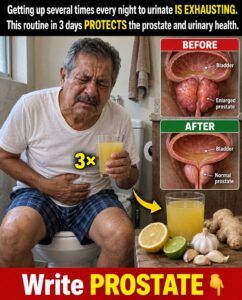
But here’s what confuses many people: the intensity of symptoms doesn’t always correspond to the size of the prostate. In other words, a prostate doesn’t have to be “enormous” to cause discomfort, and a person with nocturia doesn’t necessarily have a prostate problem as the sole cause.
Nocturia is a symptom, not a diagnosis.
What can cause nighttime urinary symptoms
The truth is that waking up to urinate can be due to several things at the same time. Sometimes it’s BPH, but it can also be influenced by how much fluid you drink in the afternoon or evening, coffee, alcohol, constipation, an overactive bladder, or certain medications.

According to the NIDDK, some medications can worsen urinary symptoms, including certain diuretics, decongestants, antihistamines, antidepressants, and tranquilizers. This doesn’t mean you should stop taking them on your own; it means it’s worth discussing them with a healthcare professional.
In fact, a small adjustment to the time you take medication can help more than any “miracle” drink. But that’s not all…
Lemon, garlic, and ginger: healthy, yes; prostate cure, not proven
The ingredients that appear in many viral posts are often common foods and, as part of a balanced diet, can be perfectly reasonable. The problem is that eating healthily is one thing, but claiming that it will reduce an enlarged prostate in three days is quite another.

To date, there is no solid clinical evidence that a mixture of lemon, garlic, and ginger “normalizes” the prostate or resolves nocturia within that timeframe. This is important because home remedies are often marketed with a promise of quick results, when the medical reality is usually slower and more complex.
Even popular prostate supplements have shown limited results. For example, a 2023 review of saw palmetto found little to no benefit when used alone for BPH symptoms. Furthermore, the NCCIH notes that for products like lycopene, the evidence remains insufficient to recommend them for BPH prevention or treatment.
That doesn’t make those ingredients “bad.” It just means they’re not a substitute for a medical evaluation when there’s a urinary obstruction or persistent symptoms.

What treatments are used for an enlarged prostate?
Not all cases require surgery. According to the NIDDK, management may include monitoring, lifestyle changes, medications, and, in some cases, procedures or surgery.
The most commonly used medications for BPH usually belong to two groups:
- Alpha blockers: relax the muscles of the prostate and bladder neck to facilitate the passage of urine.
- 5-alpha reductase inhibitors, such as finasteride and dutasteride, can slow growth or reduce prostate size in selected patients.
The difference matters. One medication can improve urinary flow without immediately reducing prostate size. Another can reduce it, but only if that treatment is truly appropriate for the specific case.
If symptoms are severe or complications arise, procedures exist to reduce or remove the tissue blocking the flow of urine. The decision depends on the severity of the symptoms, prostate size, overall health, and the patient’s preferences.
The nighttime routine that can help, without falling into myths
Before looking for a specific drink, it’s helpful to observe patterns. Often the problem isn’t “what to drink,” but when to drink it and how much liquid to consume close to bedtime.
A large glass of wine right before bed can worsen the need to get up during the night. Coffee, tea, energy drinks, and alcohol can also have an impact, especially on sensitive individuals.
A helpful strategy is to keep a record for several days. Note what you take, at what time, how many times you urinate during the day, and how many times you wake up at night. This small habit gives your doctor much more valuable information than guesswork.
In addition, if you get up at night, it’s a good idea to keep the path to the bathroom clear and well-lit. For older adults, this can reduce the risk of falls when they are half asleep.
Signs that help distinguish whether there may be BPH
BPH usually causes fairly typical, though not exclusive, symptoms. Watch for any of these:
- Weak or interrupted stream
- Difficulty starting to urinate
- Drip at the end
- Feeling of incomplete emptying
- Urinary urgency
- More frequent urination, day or night
This information alone doesn’t confirm the diagnosis, but it does provide guidance. And that’s very helpful in consultations, because the correct treatment depends on the underlying cause, not just the most bothersome symptom.
What you can do starting today: practical steps
If you wake up several times each night, there’s no need to panic. But it is a good idea to take action systematically. Here’s a simple plan you can start today:
- Keep a record for 3 to 7 days. Note how much the child drinks, at what time, how many times they urinate, and how many times they wake up at night.
- Review what you consume in the afternoon. Reduce large amounts of fluids before bed and see if coffee, alcohol, or tea worsen the problem.
- Review your medications with a healthcare professional. Do not stop taking any medication on your own, but do ask if any of them might affect your bladder or nighttime urination.
- Pay attention to other urinary symptoms. A weak stream, urgency, or a feeling of incomplete emptying are more helpful than just one bad night’s bowel movement.
- Seek medical evaluation if the problem persists. Sometimes urine tests, blood tests, or urinary tract studies are needed to find the cause.
This approach is more helpful than trying a drink for a few days and assuming the problem is gone. And here’s the most important part…
There is one symptom that shouldn’t wait.
If you feel a strong urge to urinate but suddenly can’t get any urine out, this could be a medical emergency. Urinary retention can occur when the prostate gland obstructs the flow of urine.
You should also seek medical attention if you notice blood in your urine, fever with urinary symptoms, or severe pain. BPH can cause urinary tract infections, bladder stones, and, in some cases, kidney problems if left untreated.
If you cannot urinate at all, do not wait to “see if it goes away on its own.”
Conclusion
Waking up three times a night to urinate is not something that should be considered normal if it happens frequently. An enlarged prostate is a common cause, especially after age 50 or 60, but it’s not the only possible explanation. A mixture of lemon, garlic, and ginger can be part of a normal diet, but it hasn’t been shown to reduce the prostate size or resolve nocturia in three days.
The most sensible approach is to identify the pattern, review fluids and medications, and seek evaluation if symptoms persist. When BPH is present, there are real and effective options, ranging from lifestyle changes and medications to procedures, depending on the case.
The goal isn’t for a viral image to promise a quick fix. The goal is to sleep better, empty your bladder completely, and avoid complications with a medically sound treatment.
Frequently Asked Questions
What can I take to avoid getting up to urinate at night?
There is no one-size-fits-all solution. First, the cause must be identified. If BPH is present, management may include lifestyle changes, medication, or procedures, depending on the severity.
Do garlic, lemon, and ginger reduce prostate size?
There is no solid clinical evidence that this combination reduces an enlarged prostate in three days. Eating these ingredients is not the same as treating a urinary obstruction.
Does getting up three times every night mean I have an enlarged prostate?
Not necessarily. Nocturia can occur with BPH, but also with other factors such as nighttime fluids, caffeine, alcohol, medications, or other medical conditions.
Medical disclaimer: This content is for educational purposes only and is not a substitute for medical advice. Do not discontinue medications or substitute them with beverages or supplements without professional guidance. If you are unable to urinate at all, seek medical attention immediately.


