
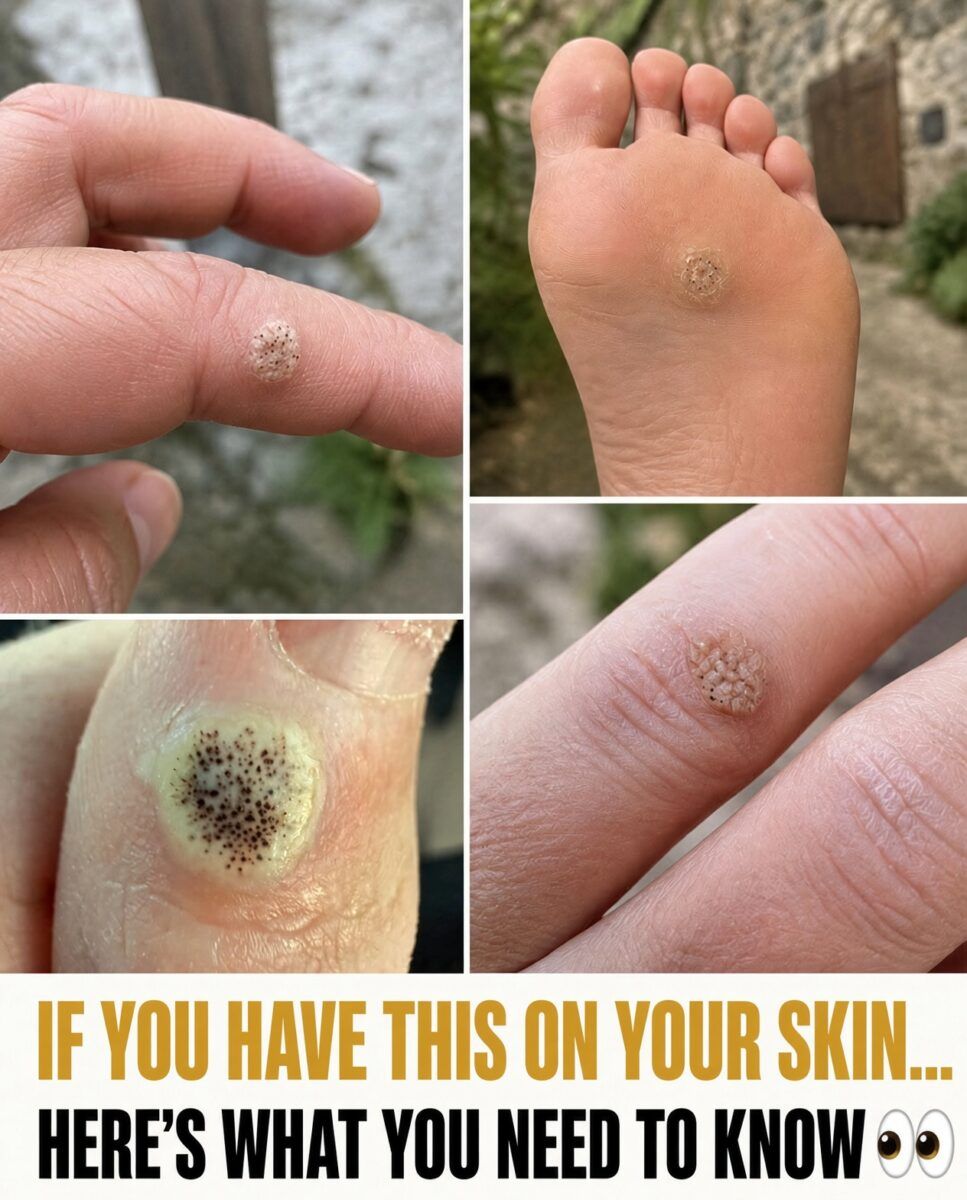
Have you noticed a small rough bump on your hand, a finger, or under your foot? It could be a wart. Very common, true warts are generally caused by certain types of human papillomavirus (HPV) and can spread through direct or indirect contact. Although many disappear on their own, some persist for months. Here are the main methods used against warts, along with the essential precautions to take before trying a home treatment.
How to recognize a wart?
There are several types of warts. Common warts appear mainly on the hands and fingers and often have a rough surface. Plantar warts, located under the foot, can become painful under the pressure of walking. Flat warts are generally small and relatively smooth, while filiform warts form small projections, often around the face.
Note: growths sometimes called “age warts” are often seborrheic keratoses and are not HPV warts.
1. Salicylic acid: the best-established home option
Pharmacy treatments containing salicylic acid are among the solutions commonly used for some common and plantar warts. Soak the area for a few minutes in warm water, dry it, then use the product exactly as directed in its instructions. The treatment generally requires consistency and may take several weeks. Do not use it on the face or genital areas without medical advice.
2. Duct tape: a popular method
Covering the wart with duct tape is a very well-known home trick. Some people alternate several days under the tape with soaking in water and very gentle removal of dead skin. However, studies on this technique give contradictory results. Never scrape a wart until it bleeds.
3. Apple cider vinegar: beware of burns
Apple cider vinegar is often presented online as a natural solution against warts because of its acidity. But unlike a properly dosed dermatological treatment, vinegar can cause irritation and chemical burns. It is therefore not recommended to leave a cotton ball soaked in concentrated vinegar on the skin for hours.
4. Crushed aspirin: not the equivalent of a wart treatment
Another recipe consists of crushing aspirin and mixing it with water. Even though its chemical name is close to that of salicylic acid, aspirin (acetylsalicylic acid) is not simply a salicylic acid wart treatment. It is better to use a product specifically formulated and dosed for this use.
5. Tea tree essential oil
Tea tree essential oil is popular for its antimicrobial properties. However, the evidence that it effectively eliminates warts remains limited. It can also cause dermatitis or an allergic reaction, particularly when used undiluted.
How to avoid transmitting warts?
Avoid scratching or picking them. Do not share razors, towels, nail clippers, or files used on the affected area. In swimming pools and communal locker rooms, wearing sandals can also reduce the feet’s contact with wet surfaces.
When should you see a doctor?
Do not treat a growth yourself when you are not sure it is really a wart. A consultation is particularly important if the lesion is on the face or genitals, bleeds spontaneously, rapidly changes color or shape, becomes very painful, or persists despite appropriate treatment. Genital warts require specific care, and acidic or irritating home remedies must not be used on that area. A dermatologist can confirm the diagnosis and propose, depending on the case, adapted treatments such as cryotherapy or other dermatological methods.
This article is for informational and educational purposes only and is not medical advice. Please consult a qualified healthcare professional before making changes to your diet or health routine.


