
After 60, feeling like your legs aren’t responding as they used to can become frustrating and even embarrassing. Climbing stairs, getting up from a chair, or walking confidently becomes more difficult, and that’s not just uncomfortable: it can also lead to reduced activity, loss of confidence, and further weakness. Often, people look for quick fixes, like “miracle” teas, but the truth is, strong legs need more than just a brew. And here’s the important part: at the end of this article, you’ll find a very simple everyday sign that can tell you if it’s time to have this weakness checked by a professional.
Why legs can lose strength with age
Over the years, the body can lose muscle mass, strength, and power. When this loss becomes significant, it is called sarcopenia , a term that describes the progressive deterioration of muscle.
The National Institute on Aging explains that muscle mass and performance gradually decline throughout adulthood, and that this decline can accelerate after age 65 in women and around age 70 in men. Lack of exercise and poor nutrition can worsen the problem.
That doesn’t mean “it’s time to resign ourselves to it.” In fact, research shows that exercise, especially strength training, can help maintain independence, mobility, and quality of life for longer.
Early signs that many people downplay
These signs may seem small at first, but together they can indicate that the legs are losing capacity:
- Needing your hands to get up from a chair.
- Go up stairs more slowly than before.
- Walk less because your legs get tired quickly.
- To stumble more often.
- Feeling difficulty carrying shopping bags.
- Losing confidence when walking on uneven surfaces.
Muscle weakness doesn’t always appear suddenly; often it creeps in little by little into the daily routine.

Green tea: interesting, but it doesn’t replace exercise
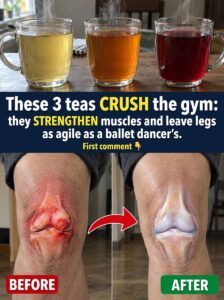
The first of the three teas is green tea . It contains catechins, plant compounds studied for their potential metabolic and cardiovascular effects. And yes, its relationship with muscle has also been investigated.
A recently published trial evaluated adults aged 60 and older. All participants exercised, and one group also received catechin-enriched green tea for 24 weeks. There were no significant differences in most physical tests or muscle mass, although a favorable difference was observed in knee extension strength.
That sounds promising, but it needs to be interpreted with caution. The study lasted months, not days, and the tea was combined with exercise. Furthermore, the evidence is still limited, so it can’t be presented as a standalone solution.

The NCCIH notes that drinking green tea is generally considered safe for most adults, even though it contains caffeine. Concentrated extracts are another story: they have been linked in rare cases to liver problems and drug interactions.
Ginger tea: it may be pleasant, but it doesn’t build muscle
The second tea is ginger . Many older people stop moving because they experience discomfort in their knees or other joints. When walking hurts, the body protects itself by reducing activity, but this also decreases the stimulation that muscles need to stay strong.
Ginger has been studied in people with joint pain, especially osteoarthritis. The NCCIH indicates that some supplements may help with symptoms, although many studies have limitations. A systematic review concluded that the available evidence does not yet confirm a clear benefit of oral ginger for knee pain and function.

In other words: it may be a pleasant drink, but it doesn’t regenerate joints or strengthen legs on its own.
If you like, you can prepare it with hot water and a few small slices of fresh ginger. It’s best to avoid highly concentrated versions. Also, keep in mind that it can cause heartburn, diarrhea, or abdominal discomfort, and it may interact with certain medications.
Hibiscus tea: useful as a beverage, not as a gym substitute
The third glass can be hibiscus tea , well-known for its deep red color and tart flavor. Its most studied relationship is not with muscle growth, but with blood pressure.
A meta-analysis of controlled trials found average reductions in systolic and diastolic blood pressure in people who consumed Hibiscus sabdariffa . However, the researchers also noted that better-designed studies were needed to confirm these results.
The NCCIH considers that the evidence on hibiscus and blood pressure remains limited and that its effects are small compared to medications indicated for hypertension.
So, what does it do for your legs? Frankly, nothing proven in terms of muscle strength. It might just be a pleasant drink, especially if you don’t add too much sugar.
Quick comparison of the three teas
| Tea | What can it offer | What has not been proven |
|---|---|---|
| Green tea | Catechins and a beverage with little or no added sugar | Regain muscle on its own |
| Ginger | A hot drink and possible limited relief from discomfort | Regenerate knees or strengthen legs |
| Jamaica | Polyphenols and possible modest support for blood pressure | Increase muscle mass |
The three together can add variety to your daily hydration, but they don’t replace protein, movement, or strength training.
What really strengthens your legs after 65
Here’s the part that many viral stories tend to omit: muscle needs a clear signal to maintain itself. That signal comes when it works against resistance.
The CDC recommends that adults 65 years of age and older engage in at least two days per week of activities to strengthen major muscle groups, in addition to aerobic activity and balance exercises.
You don’t need to start with heavy weights. In fact, it’s safest to begin with simple, progressive movements, provided your health allows it.
Useful exercises to get started
- Sitting down and standing up from a sturdy chair.
- Raise your heels while standing on a stable surface.
- Walk at a comfortable pace every day.
- Use light elastic bands.
- Practice balance with close support, if your doctor approves.
The National Institute on Aging explains that gradually increasing resistance, repetitions, or frequency helps build strength and makes everyday activities like climbing stairs, standing up, and carrying groceries easier.
The goal is not to exhaust yourself on the first day; the goal is to be able to repeat it the following week and the week after.
Don’t forget protein: tea provides almost no building blocks for muscle.
There’s another reason why three cups of tea can’t replace a real muscle-preserving strategy: the body needs amino acids, which are the “building blocks” of protein.
With age, muscle can also respond differently to diet and exercise. Research reviewed by the National Institute on Aging shows that this anabolic response may be lower, making the combination of physical activity with adequate nutrition even more important.
You don’t need expensive supplements to get started. Affordable options in your everyday diet can include:
- Egg.
- Milk or natural yogurt.
- Cheese in appropriate quantities.
- Beans and lentils.
- Fish.
- Chicken.
A simple idea is not to concentrate all your daily protein in just one meal. Spreading it out between breakfast, lunch, and dinner can be more helpful, depending on your needs.
If you have kidney disease or another condition that requires protein restriction, do not make major changes without consulting your healthcare professional.
What you can do starting today: practical steps
Theory helps, but real change begins with small, consistent actions. If you experience weakness in your legs, try this basic plan for one week:
- Choose a firm chair and practice standing up and sitting down 5 times in a row, once or twice a day.
- Walk for 10 minutes daily at a comfortable pace, and gradually increase the time.
- Include a source of protein in each main meal.
- Drink your favorite teas without excess sugar.
- If you are taking medication, check with your doctor to see if green tea, ginger, or hibiscus can interact with it.
If you already exercise, great: the next step is to increase the difficulty a bit. If you don’t exercise at all, starting gently is already a victory.
The everyday test that deserves attention
Here is the sign promised at the beginning. Notice how you stand up from a firm chair.
If you used to be able to do it easily and now you need to push yourself a lot with both arms, you lose your balance when you stand up, or you need more help to walk every month, don’t ignore it or attribute it only to age.
The NIA links significant strength loss to difficulty walking, standing, and climbing stairs. It also notes that general weakness warrants evaluation because it may be related to sarcopenia or other medical conditions.
Seek medical attention soon if weakness appears suddenly, affects only one side of the body, is accompanied by difficulty speaking, severe pain, marked swelling of a leg, shortness of breath, or chest pain.
Conclusion
Green tea, ginger, and hibiscus can be enjoyable beverages as part of a varied diet. Some contain interesting compounds and have some preliminary research, but none have been proven to strengthen legs on their own.
If after 60 you want to maintain the strength to get up, walk, climb stairs and maintain your independence, think first about progressive movement, strength training, balance and a diet with enough protein.
Teas can complement that routine. The real focus should remain on the muscle in motion.
Frequently Asked Questions
Which of these three teas increases muscle mass the most?
None of these have been shown to produce a significant increase in muscle mass in older adults on their own. Green tea has been the subject of some interesting studies when combined with exercise, but the evidence remains limited.
Can I drink green tea, ginger, and hibiscus tea on the same day?
For many people, normal amounts in their diet may be tolerable. However, if you take medication for blood pressure, heart conditions, or other chronic illnesses, it’s advisable to ask before using concentrated herbal supplements.
What helps most to keep legs strong after 65?
The best evidence supports combining physical activity, strengthening exercises at least two days a week, balance, and a diet high in protein.
Medical disclaimer: This content is for informational purposes only and does not replace the assessment, diagnosis, or individualized recommendations of a doctor, physiotherapist, or nutrition professional.


