
Have you ever gone to bed after dinner only to wake up with a burning sensation in your chest or a sour taste in your mouth?
If this sounds familiar, your sleeping position may be worth paying attention to.
Acid reflux happens when stomach contents move upward into the esophagus, the tube that carries food from your mouth to your stomach. Symptoms can become especially uncomfortable at night because lying down makes it easier for stomach contents to move toward the esophagus.
One simple strategy that may help some people is sleeping on the left side.
But why might the left side be better than the right side? And does changing your sleeping position really make a difference?
Let’s take a closer look.
What Is Acid Reflux?
Acid reflux occurs when stomach contents flow backward into the esophagus. The lower esophageal sphincter, a ring of muscle between the esophagus and stomach, normally helps prevent this backward movement.
When this barrier does not work properly, stomach acid and other stomach contents can travel upward.
Common symptoms include:
- Burning in the chest or throat
- A sour or bitter taste in the mouth
- Regurgitation
- Burping
- Bloating
- A feeling of discomfort after meals
- Coughing or throat irritation, especially at night
- Difficulty sleeping because of nighttime symptoms
Occasional reflux is common. However, frequent symptoms may be associated with gastroesophageal reflux disease (GERD) and should not simply be ignored.
Why Can Reflux Feel Worse at Night?
During the day, you are usually sitting, standing, walking, or otherwise upright. Gravity helps keep stomach contents lower in the digestive tract.
At night, the situation changes.
When you lie down, gravity has less of an effect. If you have recently eaten a large meal, your stomach may still contain a significant amount of food and digestive fluid.
This can make nighttime reflux more noticeable.
Some people also experience reflux after eating foods that commonly trigger their symptoms, such as fatty meals, spicy foods, chocolate, coffee, alcohol, or other individual triggers.
The timing of your meal can matter too.
Going to bed shortly after eating may make nighttime symptoms more likely for people who are prone to reflux.
Left Side vs. Right Side: Why Does It Matter?
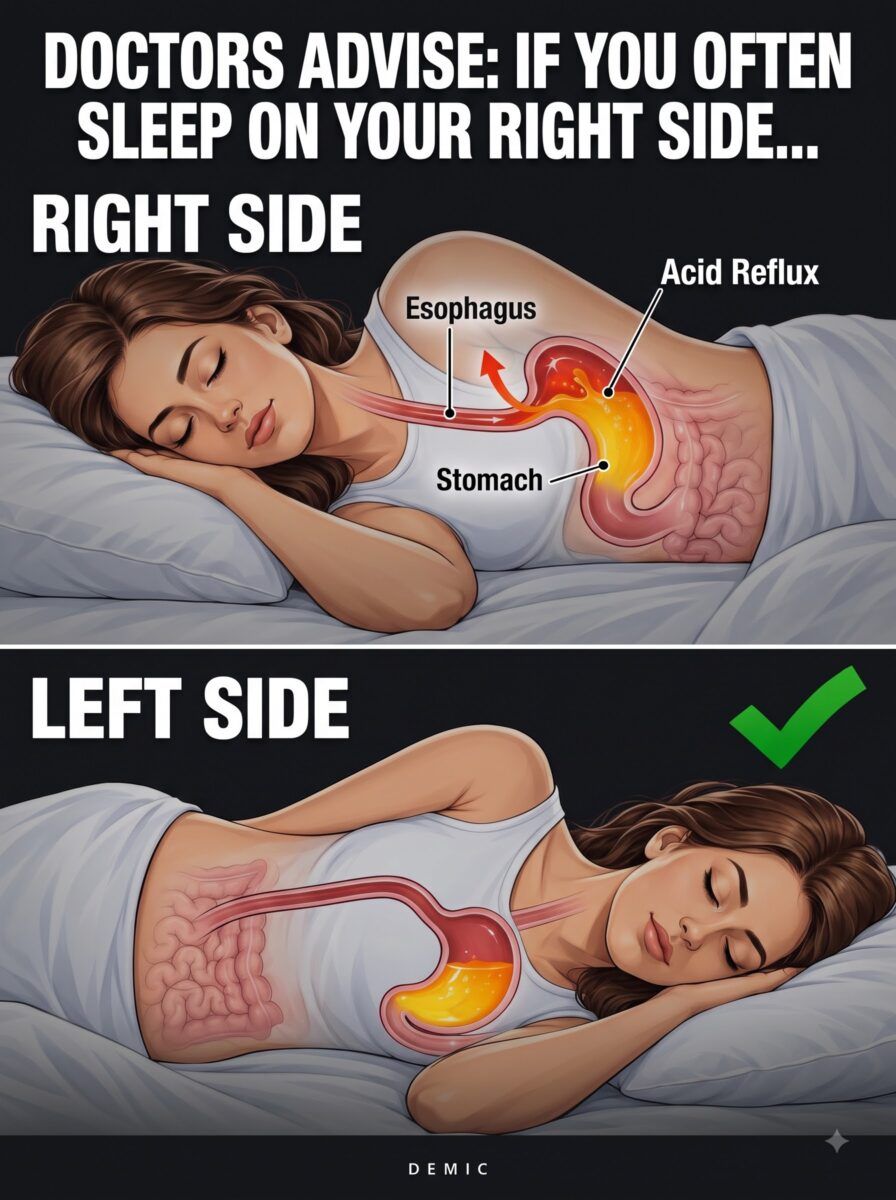
The stomach is not positioned straight across the middle of your body. Much of it sits toward the left side of the upper abdomen.
When you lie on your left side, the position of the stomach relative to the esophagus may make it harder for stomach contents to move upward.
Think of it as a simple gravity-and-anatomy effect.
By contrast, lying on the right side can position the stomach in a way that may allow stomach contents to reach the esophagus more easily in some people.
This does not mean that sleeping on the right side is dangerous.
It simply means that people who experience nighttime acid reflux may find that the left side is more comfortable.
Can Sleeping on Your Left Side Reduce Acid Reflux?
For some people, yes.
Research has found that left-side sleeping can reduce nighttime acid exposure in the esophagus compared with right-side sleeping or other positions.
The effect is believed to be related to the anatomy of the stomach and the way gravity affects the movement of gastric contents.
This is one reason why changing sleeping position is sometimes recommended as part of lifestyle management for nighttime reflux.
However, everyone’s experience is different.
Some people may notice a clear improvement when sleeping on their left side, while others may not notice much difference.
It is also important to remember that changing your sleeping position is not a treatment for the underlying cause of GERD.
What Happens When You Sleep on Your Right Side?
If you frequently experience acid reflux, you may notice that lying on your right side makes symptoms more noticeable.
The reason may be related to the position of the stomach and the esophagus.
When lying on the right side, stomach acid may have an easier path toward the lower esophageal sphincter and esophagus. This can increase the opportunity for reflux in susceptible individuals.
Again, this does not mean everyone who sleeps on the right side will develop reflux.
If you sleep comfortably on your right side and never experience heartburn, there may be no reason to change your position simply because of a general recommendation.
But if you regularly wake up with heartburn, experimenting with the left side may be worthwhile.
How to Sleep on Your Left Side More Comfortably
Simply turning onto your left side may not be enough if you find the position uncomfortable.
A few adjustments can make side sleeping easier.
1. Use a Supportive Pillow
Your head and neck should remain comfortably aligned with your spine.
A pillow that is too low or too high can create neck and shoulder discomfort.
Choose a pillow that supports your natural sleeping position without forcing your head sharply upward.
2. Place a Pillow Between Your Knees
A pillow between your knees can make side sleeping more comfortable by supporting your hips and helping maintain a more neutral position.
This can be particularly useful if you naturally move around during sleep.
3. Consider Elevating the Upper Body
If nighttime reflux is a frequent problem, simply adding extra pillows under your head may not be the best solution.
Instead, raising the upper part of the bed or using a wedge designed to elevate the upper body can help keep the torso elevated.
This creates a more gradual incline rather than bending the body sharply at the waist.
4. Avoid Lying Down Immediately After Eating
One of the most useful habits for people with nighttime reflux is allowing enough time between dinner and bedtime.
Try to avoid going to bed immediately after a large meal.
For many people with reflux, leaving several hours between eating and lying down can help reduce nighttime symptoms.
Other Habits That May Help With Nighttime Reflux
Changing your sleeping position is only one piece of the puzzle.
Your daily habits can also influence reflux symptoms.
Eat Smaller Evening Meals
Large meals can put more pressure on the stomach and may increase the likelihood of reflux.
A smaller evening meal may be easier to tolerate, particularly if you frequently experience symptoms at night.
Identify Your Personal Trigger Foods
Not everyone reacts to the same foods.
Common triggers can include:
- High-fat or fried foods
- Spicy foods
- Chocolate
- Coffee and other caffeinated drinks
- Alcohol
- Mint
- Acidic foods such as citrus or tomatoes
You do not necessarily need to eliminate all of these foods.
Instead, pay attention to your own symptoms and identify which foods appear to make your reflux worse.
Maintain a Healthy Weight If Needed
For people who are overweight or obese, losing excess weight may help reduce reflux symptoms.
Extra abdominal pressure can contribute to reflux by increasing pressure around the stomach.
Even modest lifestyle changes may be helpful for overall digestive and cardiovascular health.
Avoid Smoking
Smoking can affect the normal function of the lower esophageal sphincter and may contribute to reflux.
Quitting smoking provides many health benefits beyond digestive health.
Is Sleeping on the Left Side a Cure for GERD?
No.
This is an important distinction.
Sleeping on your left side may help reduce nighttime reflux symptoms, but it does not cure GERD or repair the underlying problem.
If you experience reflux occasionally, lifestyle changes may be enough to manage your symptoms.
However, if heartburn occurs frequently, interferes with sleep, or continues despite lifestyle changes, it is important to talk with a healthcare professional.
Persistent reflux can sometimes cause inflammation or damage to the esophagus.
When Should You Talk to a Doctor?
Occasional heartburn is usually not a reason to panic.
But frequent or severe symptoms deserve medical attention.
Contact a healthcare professional if you regularly experience:
- Heartburn several times a week
- Difficulty or pain when swallowing
- Food feeling stuck in your throat or chest
- Persistent vomiting
- Unexplained weight loss
- Persistent cough or hoarseness
- Symptoms that are becoming progressively worse
- Reflux that repeatedly wakes you during the night
Chest pain should also be taken seriously.
Heartburn can sometimes feel similar to heart-related chest pain. If you experience severe or unexplained chest pain, especially with shortness of breath, sweating, dizziness, nausea, or pain spreading to the arm, jaw, back, or shoulder, seek urgent medical care rather than assuming it is acid reflux.
A Simple Nighttime Routine for People With Reflux
If nighttime heartburn is a regular problem, consider trying a simple routine:
After dinner:
Choose a moderate-sized meal and avoid foods you know trigger your symptoms.
Before bedtime:
Give your body enough time to digest rather than lying down immediately after eating.
When going to sleep:
Try starting on your left side.
For additional support:
Consider elevating your upper body if recommended for your situation.
During the night:
If you wake with reflux, sit or stand upright rather than immediately returning to a completely flat position.
These simple adjustments may help reduce nighttime discomfort for some people.
The Bottom Line
Your sleeping position can influence how easily stomach contents move toward the esophagus.
For people who experience nighttime acid reflux, sleeping on the left side may be a useful strategy because of the stomach’s natural position and the effects of gravity.
Sleeping on the right side may worsen reflux symptoms in some individuals, although it is not inherently harmful and does not cause reflux in everyone.
The most effective approach is usually a combination of healthy habits: avoid lying down soon after eating, pay attention to personal food triggers, consider elevating the upper body when appropriate, and choose a sleeping position that reduces your symptoms.
Most importantly, don’t assume that persistent heartburn is something you simply have to live with.
If reflux is frequent, severe, or accompanied by warning signs such as difficulty swallowing, unexplained weight loss, vomiting, or significant chest pain, speak with a healthcare professional.
A small change in the way you sleep may help—but understanding why your symptoms are happening is even more important.


