
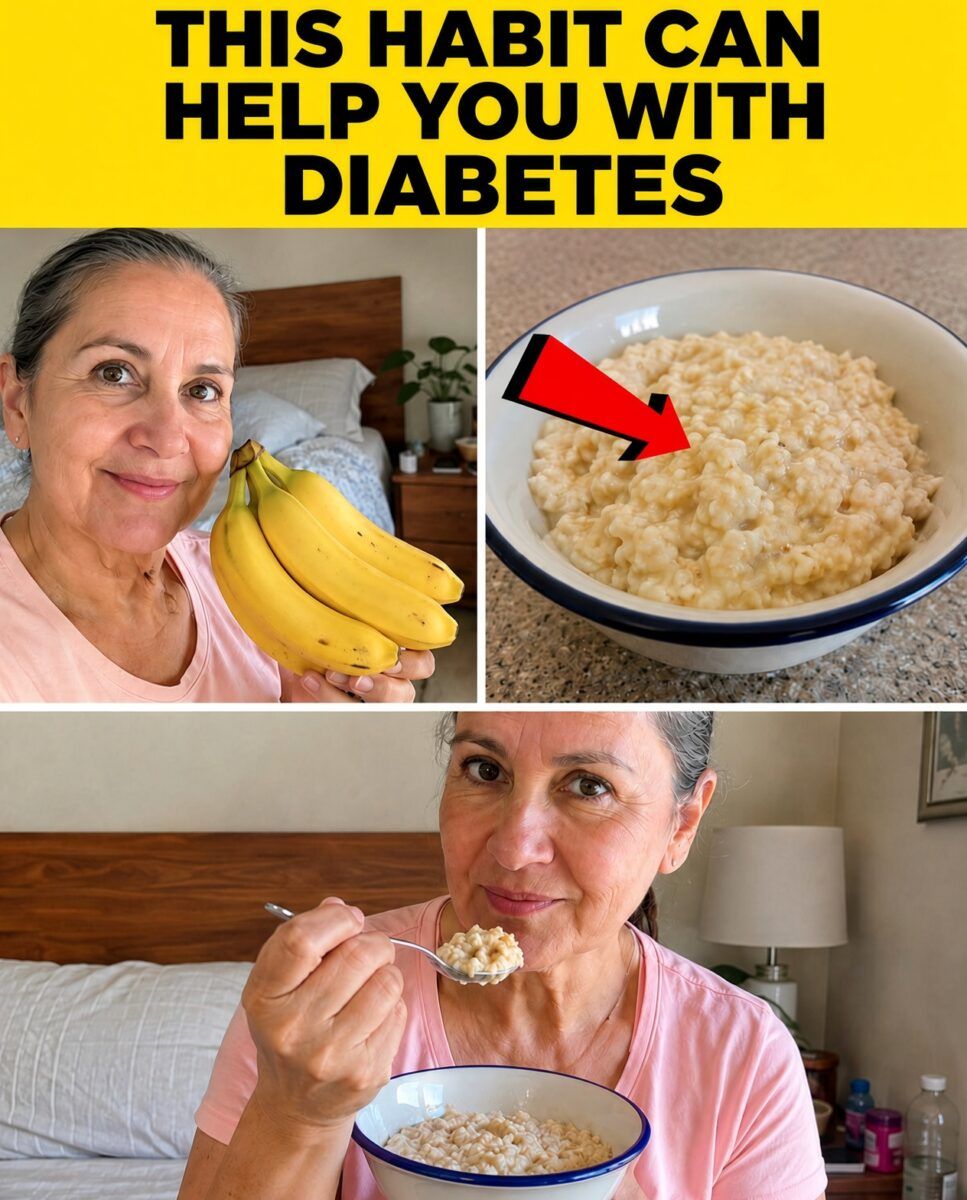
The viral poster shows a smiling senior with bananas and a bowl of oatmeal: “This habit can help you with diabetes.” No miracle ingredient, no exotic fruit — just a bowl of oatmeal as a daily habit. The article behind this poster describes 9 habits for people with diabetes, starting with breakfast. Is the humble oatmeal habit actually powerful?
The Habit
A daily breakfast of plain oatmeal (oats cooked with water or milk), optionally with banana slices — eaten consistently, every morning.
What Is Actually in the Bowl
Oats — beta-glucan soluble fiber, which slows carbohydrate absorption and blunts post-meal glucose spikes; low glycemic index compared to refined breakfast cereals. Banana (optional) — potassium, B6, fiber; adds sweetness but also sugar — portion matters. The habit itself — a consistent, fiber-rich breakfast prevents the morning pastry-and-juice glucose roller coaster.
What the Evidence Supports
Oats and blood sugar: beta-glucan’s glucose-blunting effect is well documented — oatmeal genuinely produces a smaller blood-sugar rise than equivalent refined carbs. It’s one of the best-evidenced “diabetes-friendly” breakfast foods. Breakfast consistency: skipping breakfast is associated with worse glycemic control; a regular fiber-rich breakfast helps. The 9 habits: the article’s broader list — walking after meals, consistent sleep, less sugary drinks, portion awareness — is exactly the lifestyle core of type 2 diabetes management, with strong evidence. What oatmeal can’t do: reverse diabetes alone, replace medication, or “cure” anything. It’s a strong supporting habit, not a treatment.
Safety Notes
Plain oats, not instant packets: flavored instant oatmeal often carries as much sugar as dessert — cook plain rolled or steel-cut oats. Banana portions: half a banana is plenty for diabetics; a whole large ripe banana is a meaningful sugar load. Never adjust diabetes medication based on a breakfast change — talk to your doctor as control improves. Type 1 diabetes: food habits help, but insulin management is medical — this advice targets type 2 patterns.
How to Use It Wisely
Cook plain oats; add cinnamon, nuts, or berries instead of sugar. Pair with protein (yogurt, eggs, nuts) to flatten the glucose curve further. Walk 10–15 minutes after the meal — the post-meal walk is arguably as powerful as the oatmeal. Track fasting glucose and A1C with your doctor — let the numbers confirm the habit.
Conclusion
Of all the posters in this cycle, this one is the most honest: a daily oatmeal breakfast genuinely helps with diabetes — not by magic, but by fiber, consistency, and displacing worse choices. The evidence backs the habit. Eat your oats. Walk after. Keep your doctor in the loop. Boring, cheap, and it works — the best kind of health advice.
This article is for informational purposes only and does not replace professional medical advice. Consult your trusted doctor for personalized guidance, especially if you have diabetes or take glucose-lowering medication.


