
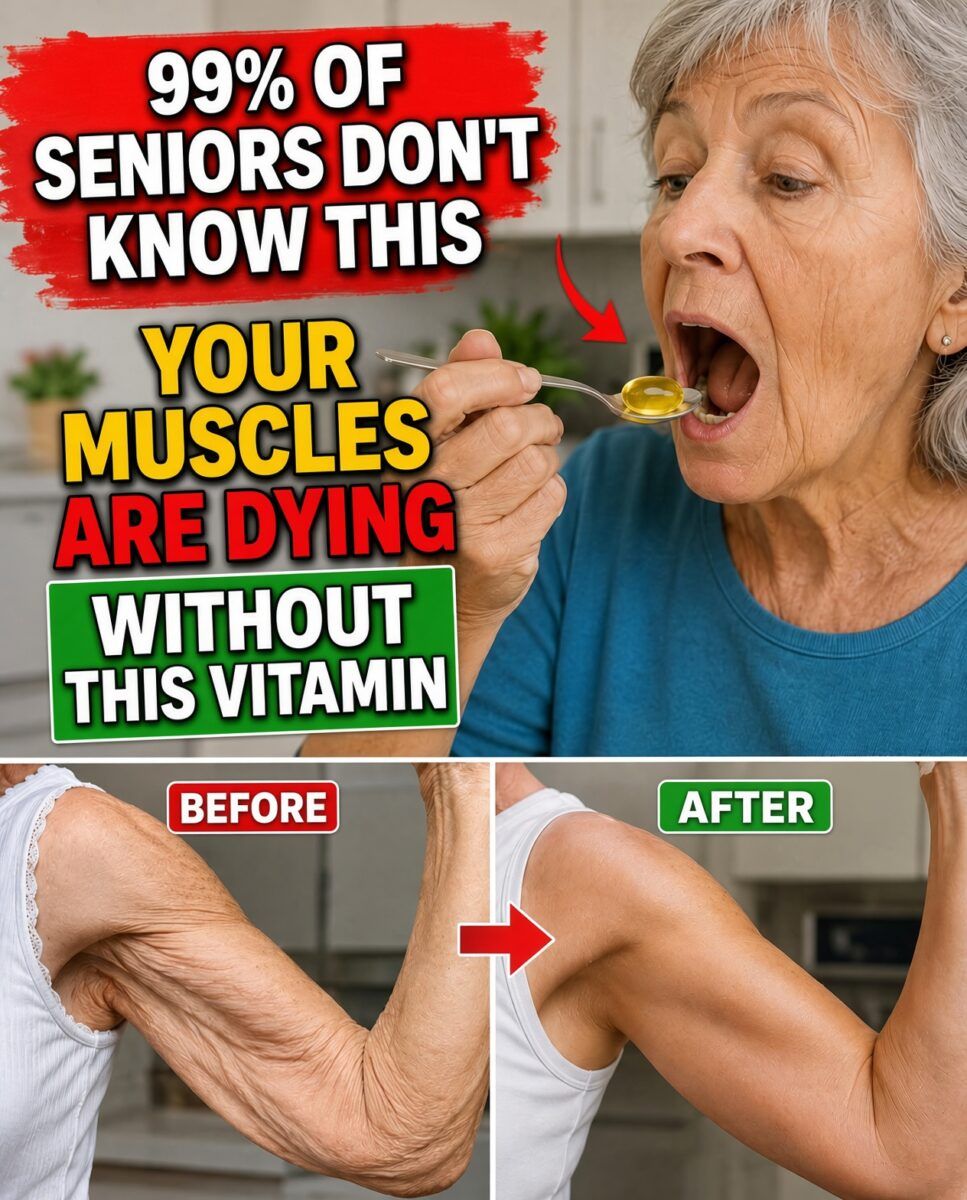
The viral poster shows a senior taking a golden oil capsule from a spoon, above a before/after of a frail arm turned muscular: “99% of seniors don’t know — your muscles die without this vitamin.” A single vitamin capsule presented as the difference between wasting and strength. The article behind this poster names the vitamin. Which one is it — and can a capsule really do what the photos show?
The Vitamin
The article points to vitamin D — the sunshine vitamin — with supporting roles for B12 and magnesium in the discussion.
What Is Actually in the Capsule
Vitamin D3 — regulates calcium, but also acts on muscle: vitamin D receptors exist in muscle tissue, and deficiency is linked to weakness, falls and slower muscle function. The oil base — vitamin D is fat-soluble; oil capsules absorb better than dry tablets.
What the Evidence Supports
Deficiency is genuinely common: a large share of older adults are vitamin D deficient — less sun, less skin synthesis, less outdoor time. Correcting true deficiency does improve muscle strength and reduces fall risk in trials. The “99%” framing: deficiency is common, but “99% don’t know” is theater — and a capsule only helps if you’re actually deficient. Blood levels decide, not posters. What a capsule can’t do: build the “after” arm in the photo. That transformation needs protein and resistance training over months. Vitamin D removes a brake; it doesn’t press the accelerator. B12 note: B12 deficiency causes fatigue and neurological symptoms often mistaken for “aging” — worth checking in seniors, but it’s a separate issue from muscle building.
Safety Notes
More is not better: vitamin D is fat-soluble and accumulates — chronic mega-doses cause high calcium, kidney stones and kidney damage. Stay within recommended doses unless a doctor supervises. Get tested: a simple blood test (25-OH vitamin D) tells you if you need it and how much. Interactions: thiazide diuretics + high-dose D can raise calcium too far; some seizure and steroid drugs lower D. The capsule doesn’t replace: protein intake, strength exercise, or medical workup for real muscle wasting.
How to Use It Wisely
Test your level; supplement only to reach sufficiency (typically 30–50 ng/mL per most guidelines). Take D3 with a meal containing fat for absorption. Pair with the actual muscle builders: 1.0–1.2g protein per kg daily and resistance training 2–3x/week. Safe sun exposure helps too — brief, regular, without burning.
Conclusion
The poster’s core is half-right: vitamin D deficiency genuinely weakens older muscles, and correcting it genuinely helps. But the “after” arm comes from training and protein, not from a capsule — the vitamin is a supporting actor marketed as the star. Test, supplement sensibly, then go lift something light. That’s the real formula.
This article is for informational purposes only and does not replace professional medical advice. Consult your trusted doctor for personalized guidance, especially before starting supplements or if you have kidney disease or take diuretics.


