
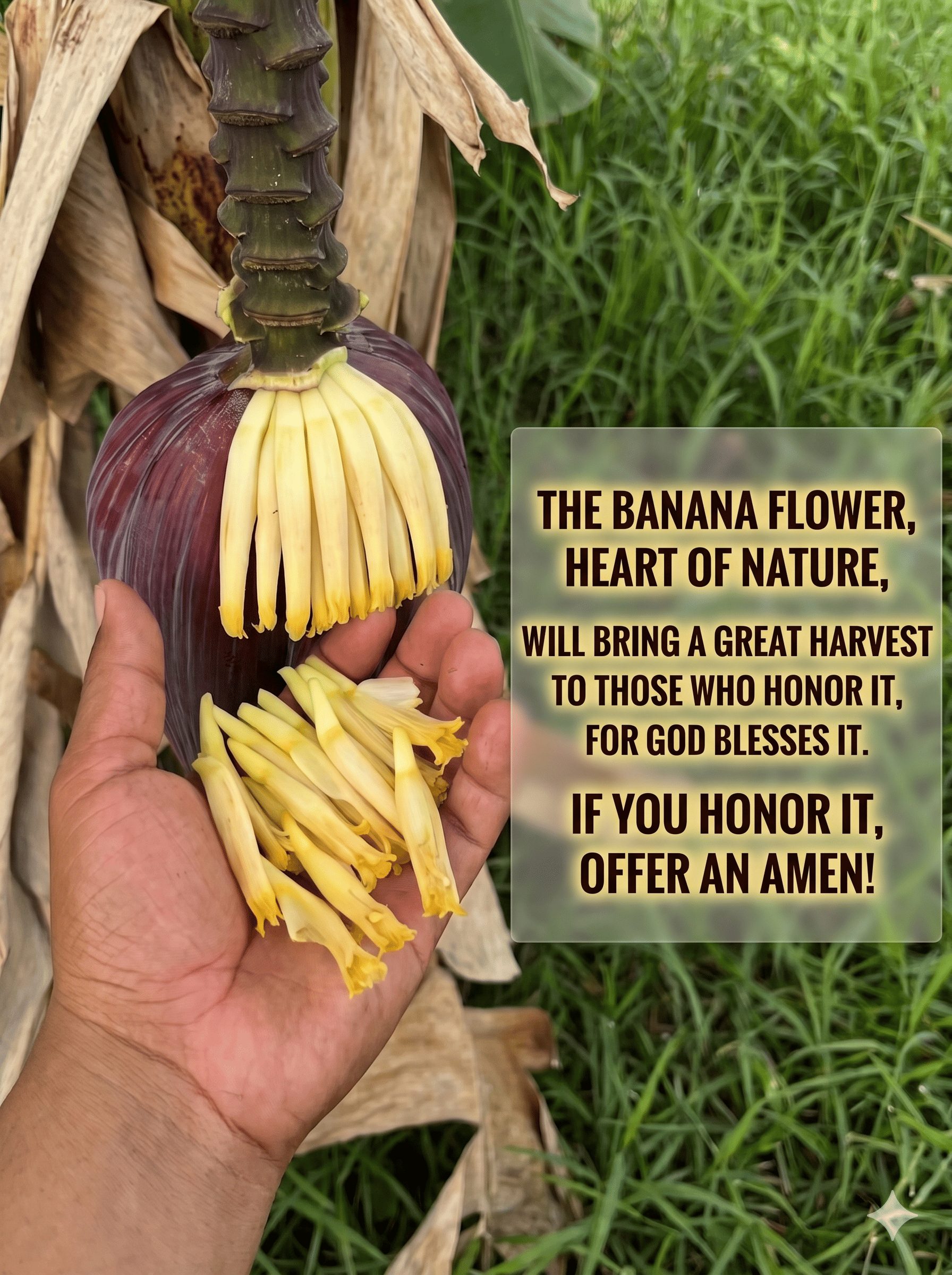
For many people, the banana fruit is the only part of the plant they consider food. But the banana flower, also called banana blossom, has been used as a traditional food in many parts of Asia for generations.
Today, researchers are becoming increasingly interested in banana flowers because they contain dietary fiber, minerals, polyphenols, flavonoids, and other plant compounds.
So, what could happen if you add banana flowers to your diet?
The answer is more interesting than you might expect.
Banana flower is not a miracle cure, and eating it will not automatically reverse diabetes, eliminate cancer, or “clean” your blood. However, its nutritional profile makes it an interesting food to include in a balanced diet.
Let’s explore what the science currently suggests.
What Is Banana Flower?
The banana flower is the large, purple-red blossom that grows at the end of a banana bunch.
It is sometimes called:
Banana blossom
Banana heart
Banana inflorescence
Banana flower
Inside the tough outer layers are tender, edible parts that can be cooked in curries, salads, soups, stir-fries, and other dishes.
Banana flowers are particularly interesting because they contain dietary fiber and various plant compounds.
Research examining banana flower bracts has found substantial amounts of dietary fiber together with phenolic compounds and antioxidant activity.
That combination may help explain why banana blossom has attracted attention as a functional food.
1. Banana Flower May Support Better Blood Sugar Management
One of the biggest reasons people are interested in banana flower is its potential relationship with blood sugar control.
Banana flower contains considerable dietary fiber. Fiber can slow digestion and the absorption of carbohydrates, which can help produce a more gradual rise in blood glucose after meals.
Laboratory and animal research has also identified several compounds in banana plant parts that may influence glucose metabolism. A systematic review published in 2025 found that different parts of the banana plant contain bioactive compounds with potential antihyperglycemic activity.
But there is an important distinction.
Potential does not mean proven treatment.
A recent double-blind randomized clinical trial involving 42 adults with prediabetes tested 3,000 mg of freeze-dried banana blossom powder daily for eight weeks.
The researchers did not find significant improvements in fasting blood glucose, HbA1c, insulin, or lipid levels. However, the banana blossom group experienced reductions in body weight, BMI, and diastolic blood pressure, along with improved bowel movements.
So, banana flower is promising as a nutrient-rich food, but it should not be promoted as a replacement for diabetes medication.
2. Its High Fiber Content May Help Your Digestive System
If there is one nutritional feature that makes banana flower particularly interesting, it is fiber.
Dietary fiber supports normal bowel function and can help increase stool bulk.
Studies analyzing banana flower have found high levels of dietary fiber in both the inner and outer bracts.
This means adding properly prepared banana flower to meals may help increase your overall fiber intake.
A high-fiber diet can also support:
Regular bowel movements
Feeling full after meals
Healthy digestion
A healthier gut environment
More balanced absorption of carbohydrates
Interestingly, the recent human trial of banana blossom powder also reported improved bowel movements among participants.
This is one of the more practical reasons to consider banana flower as a food.
3. Banana Flower Contains Antioxidant Plant Compounds
Your body naturally produces molecules involved in oxidation, and excessive oxidative stress can contribute to cellular damage.
This is why foods containing antioxidant compounds are an important part of a healthy eating pattern.
Banana flowers contain various phenolic compounds, flavonoids, and other phytochemicals.
Research has identified compounds such as ferulic acid, p-coumaric acid, chlorogenic acid, catechin, and quercetin-related compounds in banana flower preparations.
These compounds are being studied because of their antioxidant properties.
However, it is important to understand that antioxidant activity measured in a laboratory does not automatically mean that eating banana flowers will prevent a particular disease.
The safest conclusion is simply that banana flower can contribute plant-based antioxidant compounds to your diet.
4. It May Be Interesting for Heart Health
Your cardiovascular system benefits from a diet that contains plenty of vegetables, fruits, legumes, whole grains, and other fiber-rich foods.
Banana flower fits naturally into this type of eating pattern.
It provides dietary fiber and minerals, including potassium and magnesium, depending on the variety and preparation.
The recent clinical trial involving prediabetic adults also reported a reduction in diastolic blood pressure among participants consuming banana blossom powder. However, the study was relatively small and lasted only eight weeks, so larger studies are needed.
Therefore, banana flower may be supportive of a heart-friendly diet, but it should not be described as a treatment for hypertension.
5. Could Banana Flower Help With High Blood Pressure?
This is another area that deserves attention.
Potassium is an important mineral involved in fluid balance and normal blood pressure regulation.
Banana flowers can provide potassium, although the exact nutritional content varies according to the plant variety, growing conditions, and preparation method.
More importantly, the recent randomized clinical trial found a reduction in diastolic blood pressure after eight weeks of banana blossom powder supplementation in adults with prediabetes.
That is an interesting finding—but it is still early evidence.
If you have hypertension, banana flower can be part of a healthy diet, but it should not replace prescribed blood-pressure medication.
6. It May Help You Feel Fuller
High-fiber foods tend to be more filling than many highly refined foods.
Because banana flower contains substantial dietary fiber, incorporating it into meals may help increase satiety.
This can be particularly useful when you’re trying to build meals around:
Vegetables
Lean protein
Whole grains
Beans
Healthy fats
High-fiber foods
Feeling satisfied after meals may make it easier to avoid constant snacking.
Interestingly, the recent banana blossom clinical trial reported reductions in body weight and BMI in the supplementation group.
However, this does not mean banana flower is a weight-loss medicine.
Your total calorie intake, physical activity, sleep, and overall eating pattern remain much more important.
7. Banana Flower May Support Gut Health
Your digestive system is home to trillions of microorganisms.
Dietary fiber is important because certain types of fiber can be used by beneficial gut bacteria.
Banana flower’s high fiber content makes it an interesting ingredient for people trying to increase the variety of fiber-rich foods in their diets.
The phenolic compounds associated with banana flower fiber are also being investigated for their potential role in supporting the intestinal environment.
Rather than looking for a single “detox” food, it is better to regularly consume a variety of fiber-rich foods.
Banana flower can simply be one of them.
8. What About Diabetes and Advanced Glycation?
This is an especially interesting area of research.
When blood glucose remains elevated over time, sugars can react with proteins and form compounds known as advanced glycation end products, or AGEs.
Researchers have investigated banana flower because of its fiber and antioxidant compounds.
One earlier animal study found that banana flower and pseudostem preparations were associated with improvements in several markers related to hyperglycemia and AGE formation in diabetic rats.
But remember:
That study was performed in animals.
Animal research is useful for identifying possible mechanisms, but it cannot prove that the same effects will occur in humans.
The newer human clinical trial is more relevant—and it did not find significant improvements in fasting glucose or HbA1c after eight weeks.
Therefore, banana flower should be viewed as a potentially useful food, not a diabetes cure.
9. Could Banana Flower Help Prevent Cancer?
This is where it is especially important to avoid exaggerated health claims.
Banana flower contains antioxidant and polyphenolic compounds that are being studied for their biological activity.
Because oxidative stress and inflammation are involved in many chronic diseases, researchers are interested in whether diets rich in plant compounds may contribute to long-term health.
But there is currently not enough human evidence to say that eating banana flowers prevents or treats cancer.
You should never replace cancer screening, medical treatment, or professional advice with a banana flower recipe.
Instead, think about cancer prevention as a much bigger picture involving:
Maintaining a healthy weight
Eating plenty of vegetables and fruits
Eating fiber-rich foods
Exercising regularly
Avoiding tobacco
Limiting alcohol
Following recommended cancer screening
Banana flower can be part of a healthy dietary pattern—but it is not a cancer medicine.
10. How Can You Eat Banana Flower?
There are several ways to prepare banana blossom.
Banana flower salad
Thinly slice the tender inner parts and combine them with vegetables, herbs, lemon or lime, and a healthy dressing.
Banana flower curry
Cook banana flower with vegetables, spices, and a protein source for a satisfying meal.
Banana flower stir-fry
Slice the edible portion and quickly stir-fry it with garlic, ginger, vegetables, and a small amount of healthy cooking oil.
Banana flower soup
Add properly prepared banana blossom to soups with vegetables, beans, or lean protein.
The goal is to use banana flower as a whole-food ingredient, rather than relying on concentrated supplements.
How to Prepare Banana Flower Properly
Fresh banana flowers can contain bitter compounds and may darken after cutting.
A common culinary approach is to remove the tougher outer bracts, take out the tender inner portions, slice them, and soak them briefly in water with lemon juice or another acidic ingredient before cooking.
Cooking methods vary by culture and banana variety.
If you have never prepared banana flower before, start with a small culinary portion and make sure it is properly cleaned and cooked.
Who Should Be Careful?
Banana flower is a food, but “natural” does not automatically mean “safe for everyone in unlimited amounts.”
People with diabetes who take glucose-lowering medication should monitor their blood glucose as recommended by their healthcare professional.
People taking blood-pressure medication should also avoid assuming that banana flower can replace treatment.
If you have kidney disease or have been told to restrict potassium, ask your healthcare professional whether banana flower fits your diet.
And if you are considering concentrated banana flower powders, extracts, or supplements, discuss them with a qualified healthcare professional first.
So, What Will Happen If You Use Banana Flowers for Your Body?
The answer is not that your body will suddenly be “detoxed” or that disease will disappear.
What may happen is much simpler—and more realistic.
By adding properly prepared banana flower to your meals, you can increase your intake of dietary fiber and plant-based compounds, while adding variety to your diet.
Its nutritional profile makes it particularly interesting for people who want to support:
Healthy digestion
Adequate fiber intake
Balanced eating for blood sugar
Cardiovascular health
Healthy blood pressure
Overall antioxidant-rich nutrition
Research into banana blossom and metabolic health is still developing. The first recent randomized human trial produced some encouraging findings for weight, BMI, blood pressure, and bowel function, but it did not show significant improvements in fasting glucose or HbA1c.
That means we should be excited about the possibilities—but realistic about the evidence.
Final Takeaway
Banana flower may be one of the most underrated edible parts of the banana plant.
It is naturally rich in fiber and bioactive plant compounds, and research suggests it may have interesting nutritional and metabolic properties.
For people concerned about diabetes, hypertension, digestion, weight, or cardiovascular health, banana flower can be a nutritious addition to an overall healthy eating pattern.
But don’t think of it as a miracle cure.
The real power comes from consistency: more whole foods, more fiber, less added sugar, regular physical activity, good sleep, and appropriate medical care.
Sometimes, the healthiest foods are not the most expensive or exotic.
They may simply be the foods we’ve been overlooking all along.
And banana flower could be one of them.


