
Varicose veins can make your legs feel heavy, swollen, and painful just when you need to get on with your day. That’s why it sounds tempting to believe that a tea “cleanses” your veins, improves circulation, and even protects against blood clots. The problem is that this idea conflates two different things and can give a false sense of security. The good news is that there are measures that relieve symptoms and medical treatments that actually help. And at the end, I’ll show you what really works, without falling for miraculous promises.
First things first: varicose veins are not just an aesthetic nuisance
Varicose veins appear when the veins in the legs stop functioning properly. Instead of efficiently returning blood to the heart, some of that blood pools, causing the vein to dilate. Over time, this can lead to heaviness, burning, swelling, and pain.
The truth is, the problem isn’t that the blood is “stuck” due to a lack of tea. The main issue is usually with the venous valves, which no longer close properly. And that completely changes how it’s treated.
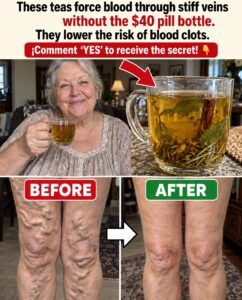
A cup of tea can be comforting, but it can’t repair a damaged vein valve.
Varicose veins and blood clots are not the same thing
This point is key. Varicose veins are dilated and twisted superficial veins. In contrast, a blood clot in a deep vein is known as deep vein thrombosis or DVT. They are different problems, although both can affect the legs.
According to the CDC, a DVT can cause swelling in one leg, pain, tenderness, warmth, and redness or discoloration. But here’s the worrying part: many people don’t have clear symptoms.

That means relying on a tea to “prevent blood clots” may delay addressing a serious problem.
| Problem | What happens |
|---|---|
| Varicose veins | The venous valves fail and blood accumulates |
| Venous insufficiency | Blood return from the legs is poor |
| TVP | A clot forms in a deep vein |
| Pulmonary embolism | Part of the clot reaches the lungs |
So, what does help with varicose veins?
The interesting part is this: the body does respond very well to simple measures that improve venous return. And no, they don’t have to be complicated to work.
Walking, ankle movements, leg elevation, and wearing compression stockings when indicated can relieve symptoms and help improve blood flow. In fact, MedlinePlus and other medical sources recommend these measures as part of conservative management.

Habits that can really make a difference
- Walk regularly, even if it’s in short bursts.
- Avoid sitting or standing for many hours at a time.
- Flex and extend your ankles several times a day.
- Elevate your legs above heart level when resting.
- Maintain a healthy weight if your doctor recommends it.
The logic behind this is simple: the calf muscles act as a natural pump. When you walk, you help push the blood upwards. When you remain still for a long time, that help disappears.
Elevating your legs can relieve heaviness.
Gravity doesn’t help when you spend many hours sitting or standing. That’s why elevating your legs can temporarily reduce swelling and the feeling of heaviness.
It doesn’t fix damaged veins, but it can make you feel better. And for many people, that difference makes a big difference in their daily lives.

A helpful routine is to elevate your legs for a few minutes several times a day, especially at the end of the day. If you notice relief, it’s a sign that your venous system appreciates the rest.
Do compression stockings work?
For many people, yes. Compression stockings apply graduated pressure to the leg, which promotes blood return and can reduce swelling. They can also lessen the feeling of tired or heavy legs.
But here’s an important detail: not everyone should use them without guidance. The NHS warns that they may not be suitable for people with arterial disease in their legs. That’s why it’s advisable to choose the correct compression level with professional support, especially if you’re over 60 or have other health conditions.
What helps one person may not be safe for another.
And what about herbal teas that promise to “thin the blood”?
This statement sounds natural and convincing, but it can be misleading. Blood clotting is a delicate balance: if the blood clots too much, the risk of thrombosis increases; if it clots too little, the risk of bleeding increases.
That’s why a blood-thinning herb isn’t automatically good. Some can interact with medications, especially blood thinners. The NCCIH warns that products like ginkgo can increase the risk of bleeding when combined with warfarin.
The practical conclusion is clear: “natural” does not mean “safe”, much less “suitable to replace medical treatment”.
If you take anticoagulants, be careful with this.
- Do not stop taking your medication to try an infusion.
- Don’t assume an herb is harmless just because it’s sold as tea.
- Inform your doctor about supplements, teas, and natural products.
- Ask before combining herbs with warfarin, apixaban, rivaroxaban, or dabigatran.
Anticoagulants are used in specific situations and at studied doses. A tea does not have the same accuracy, the same evidence, or the same safety.
Do visible varicose veins disappear with infusions?
There is no evidence that tea eliminates structural varicose veins. “Before and after” photos can be misleading because a diseased vein doesn’t usually disappear after drinking a beverage for a few days.
When treating specific veins, medical procedures such as sclerotherapy, laser ablation, radiofrequency ablation, or phlebectomy are available. These methods act directly on the diseased vein, which is precisely what an infusion cannot do.
And that’s the difference between subjective relief and real treatment.
When is it advisable to consult a doctor?
There are symptoms you shouldn’t try to manage at home hoping they’ll “go away on their own.” If a leg suddenly swells, hurts, feels hot, or changes color, you should rule out deep vein thrombosis.
The CDC also notes warning signs of a pulmonary embolism, such as sudden shortness of breath, chest pain, coughing up blood, fainting, or an irregular heartbeat. These require urgent medical attention.
If there is a warning sign, don’t wait to see if a tea will take effect.
Which people are at higher risk of blood clots?
The risk of thrombosis increases when blood circulates more slowly or when there are factors that promote clotting. These include prolonged immobility, recent surgery, hospitalization, vein injuries, advanced age, a personal or family history of thrombosis, and some chronic diseases.
Certain estrogen-related factors can also play a role. That’s why preventing blood clots isn’t just about one drink; it requires a holistic approach.
Practical plan: what you can do starting today
If your varicose veins bother you daily, here’s a simple and realistic plan that makes medical sense:
- Walk for 10 to 15 minutes several times a day, depending on your ability.
- If you work sitting down, get up every 30 to 60 minutes.
- Do ankle exercises when you can’t walk.
- Elevate your legs when resting.
- Ask if compression stockings are right for you.
- Consult if there is persistent pain, marked swelling, or changes in the skin.
- If you take blood thinners, please mention any teas or supplements you use.
This approach doesn’t promise miracles in 48 hours, but it is based on real physiology and solid medical recommendations.
The part that almost no one tells you
Many people seek out tea because they want an easy, inexpensive, and natural solution. And that’s understandable. Living with heavy, painful, or swollen legs is physically and emotionally exhausting.
But the real breakthrough comes when you stop looking for a drink that “fixes” the vein and start treating the cause: immobility, venous pressure, damaged valves, or a problem that needs medical evaluation.
That’s when the results change.
Conclusion
A cup of tea can be enjoyable and, in some cases, part of a healthy routine. But it hasn’t been proven to repair varicose veins or prevent blood clots on its own. Varicose veins appear primarily due to malfunctioning venous valves, not because the blood needs to be “pumped” by an infusion.
What does help is walking, moving your legs, elevating them, using compression when appropriate, and consulting a doctor if you experience any warning signs. And if you take anticoagulants, don’t replace your treatment with herbal products.
The most useful question is not what tea “opens” your veins, but what is really happening in your legs and what measure is safe for you.
Frequently Asked Questions
Can tea get rid of varicose veins?
An infusion has not been proven to eliminate structural varicose veins. It may be comforting, but it is not a substitute for measures such as walking, elevating the legs, wearing compression garments, or undergoing medical procedures when indicated.
Do varicose veins mean I’m going to have a thrombosis?
Not necessarily. Varicose veins and deep vein thrombosis are different problems. Even so, if a leg suddenly swells, hurts, becomes hot, or changes color, you should seek medical attention.
Can I drink herbal teas if I’m taking blood thinners?
It’s unwise to assume they’re safe. Some herbs can increase the risk of bleeding or interfere with the effects of medications like warfarin. Always consult a doctor before combining them.
Medical notice: This content is for informational purposes only and does not replace the evaluation of a healthcare professional. Do not stop taking blood thinners or other medications to try home or herbal remedies. Seek urgent medical attention if you experience sudden difficulty breathing, chest pain, coughing up blood, fainting, or if one leg becomes swollen, warm, painful, or red.


