
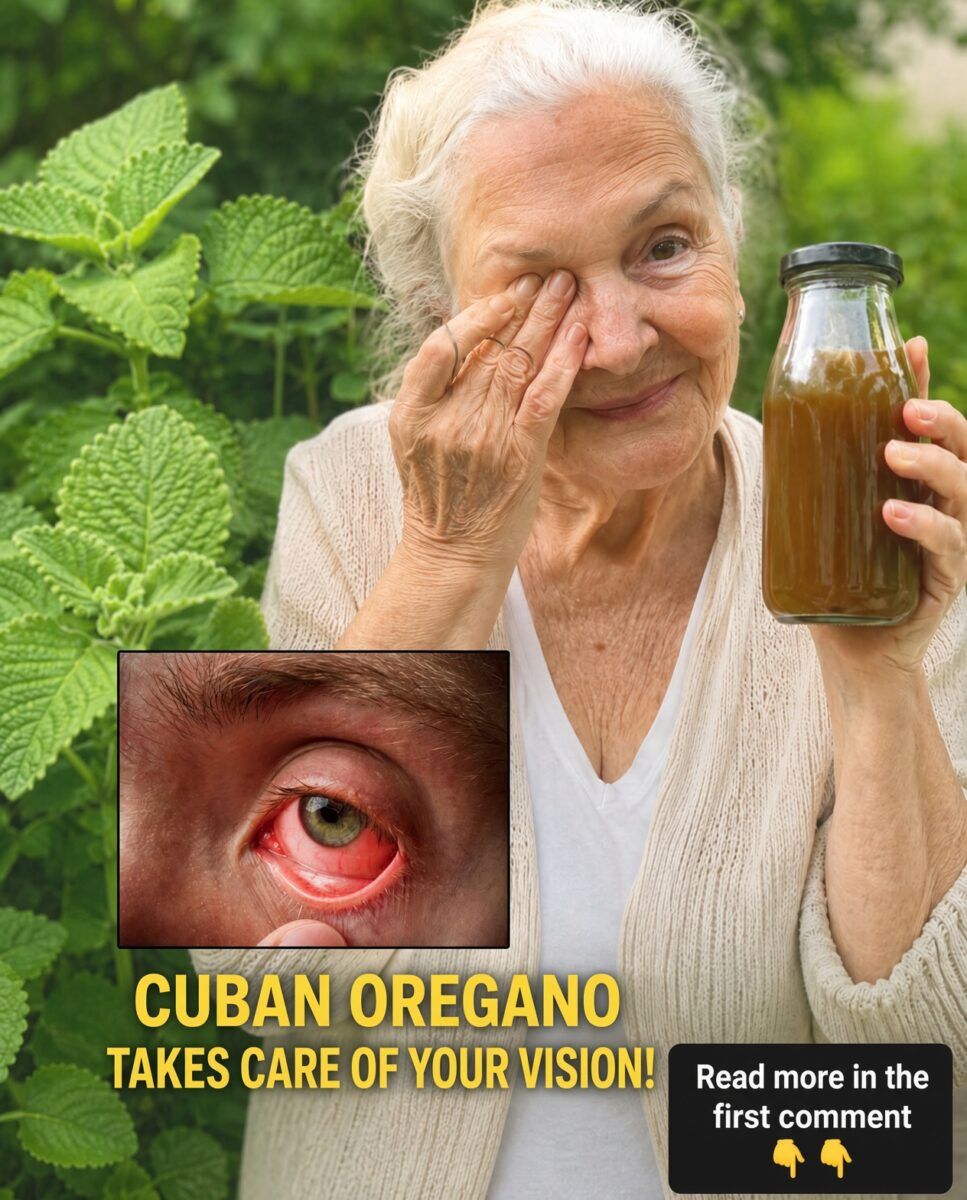
The viral poster shows a smiling senior holding a bottle of brown herbal infusion beside lush Cuban oregano plants, with an inset of a red, irritated eye: “Cuban oregano cares for your vision! Read more in the first comment.” Cuban oregano (Plectranthus amboinicus) — the thick-leafed aromatic herb of Caribbean kitchens — brewed as an eye-care infusion. The article behind this poster presents it as vision support. What does tradition claim, and what does the evidence say?
The Remedy
A handful of fresh Cuban oregano leaves; hot water, steeped 10–15 minutes; strained and drunk warm, daily; in folk use also cooled as an eye compress.
What Is Actually in It
Cuban oregano — rich in carvacrol, thymol and rosmarinic acid: aromatic compounds with studied antioxidant and antimicrobial properties. Antioxidants — the infusion delivers polyphenols, though in modest amounts compared to food sources. What it isn’t: a source of lutein, zeaxanthin or vitamin A — the nutrients with the strongest evidence for vision.
What the Evidence Supports
Eye irritation: warm herbal compresses can soothe tired, mildly irritated eyes — the comfort is real, though it’s the warmth and rest doing most of the work, not the specific herb. Antimicrobial tradition: Cuban oregano has genuine antimicrobial activity in lab studies — relevant to folk uses for minor skin and respiratory complaints, but eye infections need proper medical treatment. Vision itself: no herb infusion corrects refractive error, clears cataracts, lowers glaucoma pressure, or treats macular degeneration. The nutrients that protect vision long-term (lutein, zeaxanthin, omega-3s, vitamin C) come from leafy greens, fish and colorful produce — not from this tea. Red eyes: persistent redness can signal allergy, dry eye, infection or uveitis — worth an eye exam, not just an infusion.
Safety Notes
Never put homemade infusions directly in the eyes unless a doctor advises — non-sterile liquids risk serious eye infection. Allergies: people sensitive to mint-family plants (oregano, thyme, basil) can react to Cuban oregano. Pregnancy and medication: concentrated herbal use deserves a doctor’s input. Sudden vision changes, eye pain, or persistent redness — see an ophthalmologist promptly.
How to Use It Wisely
Enjoy the infusion as a pleasant herbal tea — that’s its honest role. For real vision protection: leafy greens daily, regular eye exams after 40, blood sugar and pressure control, UV sunglasses, no smoking. Treat the red, irritated eye in the poster’s inset with its actual causes in mind — dryness, allergy, or infection — not just tea.
Conclusion
Cuban oregano is a fine traditional herb with real aromatic and antimicrobial compounds — as a tea, it’s pleasant and harmless. But “cares for your vision” overpromises: no infusion rebuilds the eye’s optics or its retina. Drink it for the ritual and the flavor. Guard your vision with the unglamorous proven tools — greens, exams, and sunglasses.
This article is for informational purposes only and does not replace professional medical advice. Consult your trusted doctor or ophthalmologist for personalized guidance, especially for persistent redness, pain, or vision changes.


