
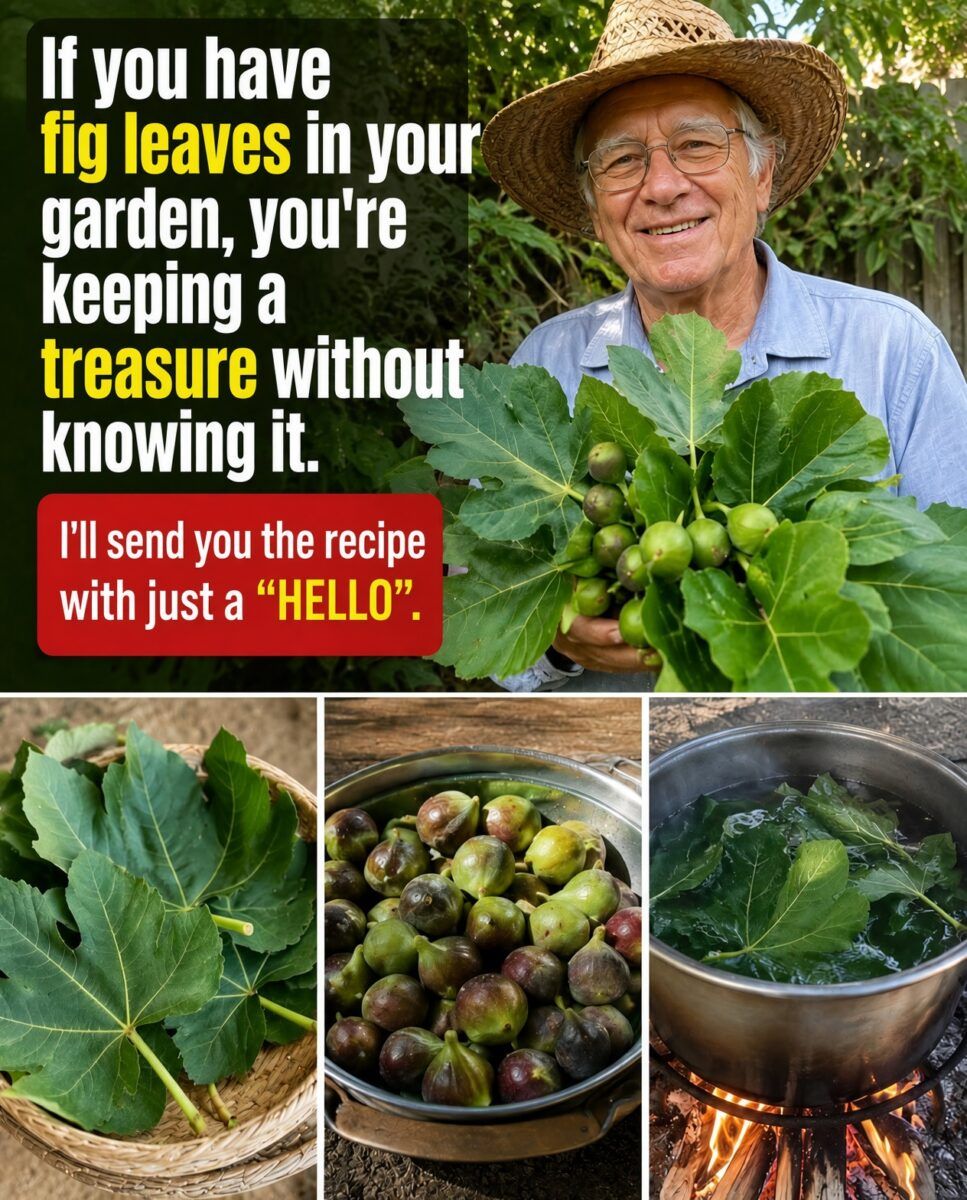
The viral poster shows a smiling gardener holding fig branches: “If you have fig leaves in your garden, you’re keeping a treasure without knowing it. I’ll send you the recipe with just a ‘HELLO’.”
TRADITIONAL USES
Blood sugar support tea (Spain/Middle East); milky sap for warts/skin growths; digestive comfort; respiratory teas. Preparation: few fresh/dried leaves steeped 10 min, strained, 1–2 cups/day.
CONTENTS
Furanocoumarins (psoralen, bergapten — cause sun sensitivity); flavonoids/phenolics (antioxidant, anti-inflammatory in lab); phytosterols. Animal studies suggest possible glucose/triglyceride effects — not human proof.
SAFETY WARNING
Furanocoumarins + sunlight = phytophotodermatitis (painful burn-like reaction) — handle leaves/sap with care, no sap on skin before sun; possible additive glucose-lowering with diabetes meds — monitor, consult doctor; caution with fig/mulberry/latex allergy; sap irritates skin/eyes.
EVIDENCE
Plausible traditional tonic with antioxidants; NO solid human trials for diabetes/cholesterol/skin cures. The real treasure: a free pleasant garden tea, not a hidden cure.
WISE USE
Occasional pleasant beverage, not medicine; gloves if skin-sensitive; avoid sap on skin before sun; diabetics tell doctor, watch glucose; never replace prescribed treatment.
CONCLUSION
A charming garden treasure — traditional Mediterranean tea with real antioxidant compounds; enjoy the ritual, handle with respect, keep proven treatments in place.
This article is for informational purposes only and does not replace professional medical advice. Consult your trusted doctor for personalized guidance, especially if you have diabetes or take medication.


