
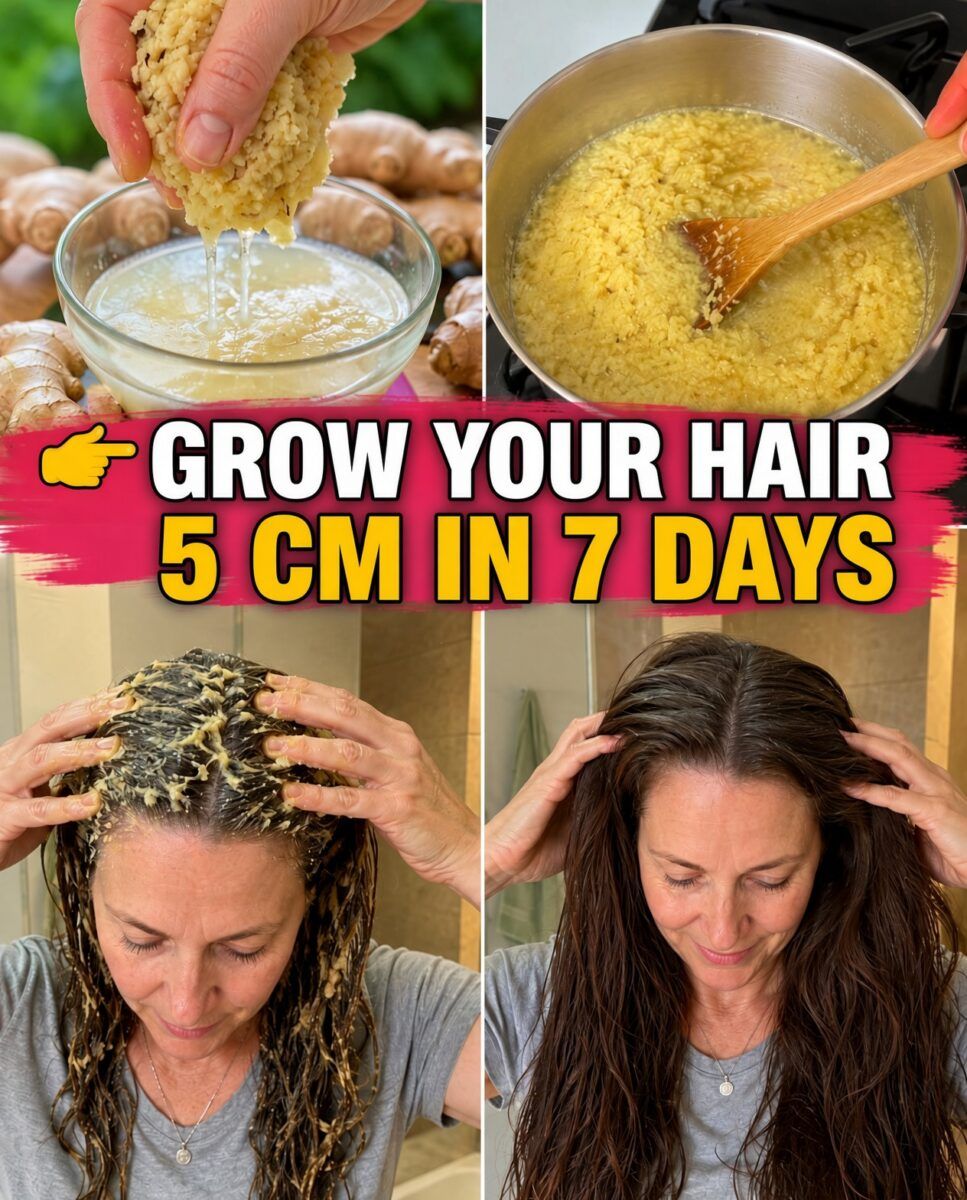
Have you ever wondered why some hair routines seem to promise miracles, yet your hair looks the same in the mirror? Maybe you’ve seen videos with golden bottles, intense massages and fast-growth promises, and were left with one concrete doubt: which part is useful and which part is pure noise?
Today we’ll sort out that chaos. You’ll discover what ginger can bring to scalp care, why some people feel their hair “more alive” after using it, and which steps usually go unnoticed when someone talks about hair growth. And yes, we’ll also look at the limits — because those almost never appear in headlines.
The real problem behind quick promises
When someone sees “grow 5 cm in 7 days,” the impulse is immediate. Who wouldn’t want a quick fix? The problem is that hair grows at its own pace, and what often changes first isn’t length but the feeling of cleanliness, hydration or manageability. A head of hair can feel softer, look shinier or break less — and then it seems like it “grew more.” But without careful measuring, the visual effect can exaggerate what really happened.
There’s another point that’s often forgotten: the scalp. If it’s dry, irritated or accumulating residue, hair can look dull even if length hasn’t changed. Wouldn’t it be more useful to start at the base before obsessing over the tips?
Why ginger drew so much attention
Ginger is known for its natural compounds and its spicy, warm, almost penetrating aroma. In homemade cosmetics, it’s often used because it can bring a stimulating sensation to the scalp, and because many people associate it with a more active massage routine. But that doesn’t mean identical results for everyone. The detail almost nobody mentions: the massage, the consistency and the way you apply the product can matter as much as the ingredient. Often the “secret” isn’t in the bottle — it’s in the habit.
What you might notice before seeing length
Perceived benefits usually appear in stages. First you notice texture, then shine, then ease of detangling — and only later do you wonder whether the length changed. If you only wait for centimeters, you might overlook useful improvements. Some oils used with ginger can help seal in surface hydration, reducing the appearance of dryness and breakage — not a promise of accelerated growth, but possible help for hair to keep its look better.
7 signs and benefits that draw the most attention
1. A more active-feeling scalp. Many describe a slight warmth or freshness when massaging with ginger. The constant massage may be the most valuable part, not just the ingredient.
2. A more mindful routine. When you apply something with intention, you stop rubbing out of habit and start observing your hair.
3. Less friction when combing. Combined with a gentle technique, hair can feel slipperier and easier to manage — fewer unnecessary pulls, and in theory less visible breakage over time.
4. A renewed shine feeling. Some notice hair “catches light” better after an oil routine — not magic, just surface: a more aligned fiber reflects better.
5. A better massage experience. Ginger’s warm, spiced aroma turns a common gesture into more of a ritual — and pleasant routines, repeated, tend to last.
6. Possible support for the look of density. If hair breaks less and looks tidier, it can appear more abundant — not the same as “creating” new hair, but visually it can make a difference.
7. More hair discipline. A routine with clear steps forces you to measure, observe and repeat — reducing improvisations that often damage more than they help.
How to use it with more safety and common sense
If you decide to try a homemade preparation, start with a small amount and observe how your skin responds. The scalp can be sensitive, and natural doesn’t always mean harmless. Avoid overly frequent applications if you notice itching, redness or dryness — pause and review instead. If you use hair treatments, dyes or have scalp conditions, the prudent thing is to consult a health professional before adding anything new. The goal isn’t “doing more” but doing better: a brief massage, a moderate application and honest observation.
Practical guide to applying it without complications
Step 1: test a small amount on a reduced area — stop if irritation appears. Step 2: massage with fingertips, no nails, don’t rub hard. Step 3: leave it on per tolerance and habit — avoid excessive times if your skin is sensitive. Step 4: wash gently and observe how your hair responds — no very hot water. Step 5: record changes in texture, shine and breakage — don’t rely on a single measurement.
What can really change your perspective
The true value of these routines isn’t in promising the impossible. It’s in helping you understand your hair better: noticing what dries it, what weakens it, what makes it feel more comfortable. If after trying an option your hair looks more manageable, tangles less or feels softer, you already have a useful signal. Start with three simple ideas: observe your scalp, measure changes with patience, and prioritize gentleness.
This article is for informational and educational purposes only and is not medical advice. Please consult a qualified healthcare professional before making changes to your diet or health routine.


