
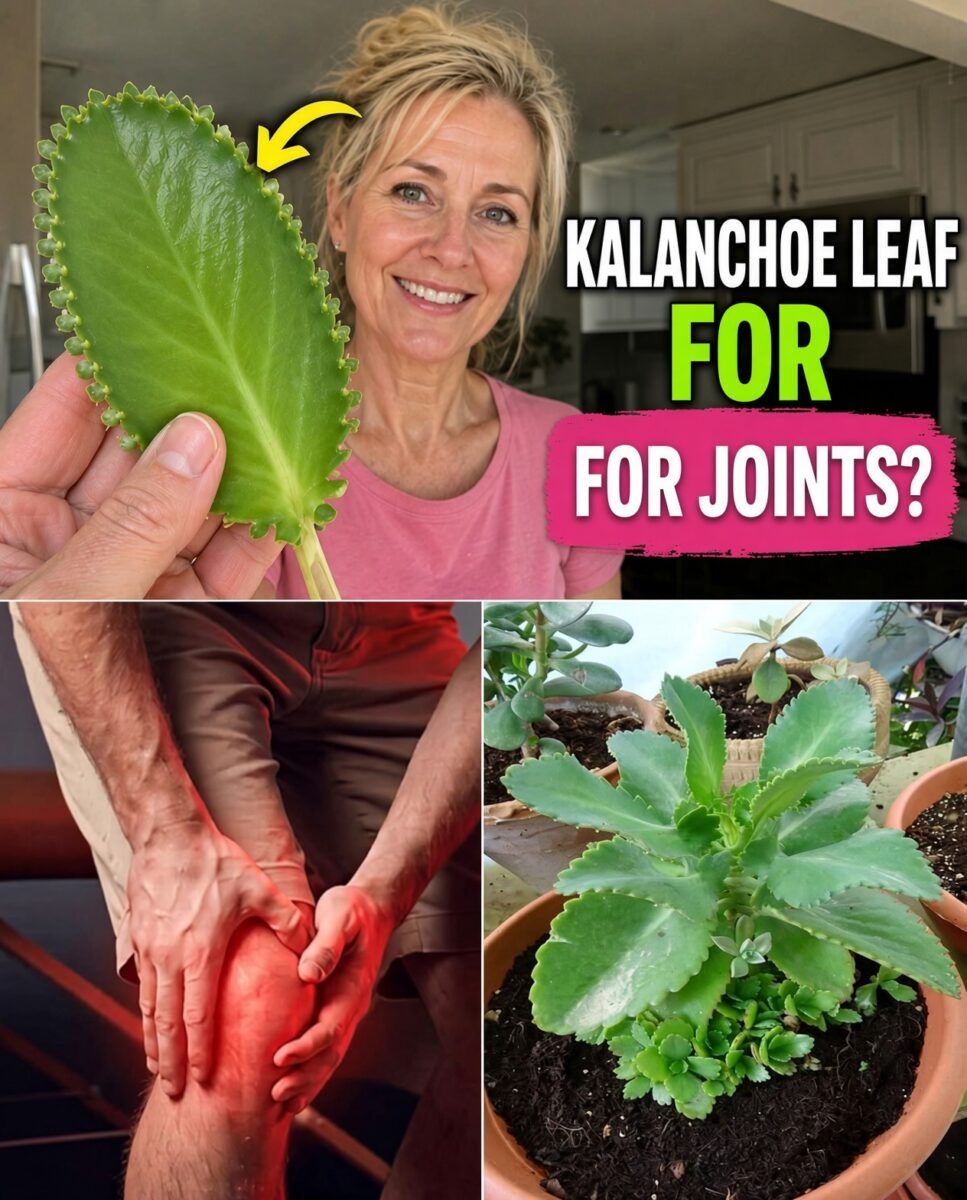
The viral poster shows a smiling woman holding a large kalanchoe leaf, with a man clutching a red, painful knee and potted kalanchoe plants below: “Kalanchoe leaf for joints?” Kalanchoe (Kalanchoe pinnata, “leaf of life”) — the succulent with plantlets on its leaf edges — is a staple of Latin American folk medicine. The article behind this poster presents it for joint and knee pain. What does it actually offer?
The Remedy
Fresh kalanchoe leaves, crushed or warmed; applied as a poultice to painful joints, or brewed as a tea in folk tradition; sometimes combined with gentle massage around the knee.
What Is Actually in It
Bufadienolides — the plant’s signature compounds; studied for various bioactivities, but also the reason for its toxicity profile. Flavonoids and antioxidants — quercetin and related compounds with mild anti-inflammatory effects in lab studies. Mucilage — the leaf’s gel, soothing on skin like a mild aloe.
What the Evidence Supports
Traditional joint use: kalanchoe poultices are a long-standing folk remedy for bruises, swelling and joint pain across the Caribbean and Latin America — the use is traditional, not trial-proven. Anti-inflammatory signals: lab studies show anti-inflammatory activity in extracts, but human joint trials are essentially absent. What it can’t do: regrow cartilage, reverse osteoarthritis, or fix a torn meniscus. Knee arthritis responds to weight management, strengthening, and medical care. The poultice effect: warmth, rest, and attention genuinely ease perceived pain — the ritual helps even when the chemistry is modest.
Safety Notes — Read Carefully
Kalanchoe is toxic if eaten in quantity: bufadienolides affect the heart — the plant has poisoned livestock and can be dangerous to people and pets if ingested carelessly. Folk teas exist, but dosing is unstandardized and risky. Skin use is the safer tradition — and even then, test a small area first; some people react. Keep away from children and pets. Drug interactions: theoretically relevant for heart medications (digoxin-like effects) — don’t combine casually. Severe knee pain, locking, swelling, or inability to bear weight — see a doctor; these need diagnosis, not leaves.
How to Use It Wisely
If you try the folk poultice: clean leaf, brief skin contact, watch for irritation, and stop if the skin protests. Don’t drink kalanchoe preparations without professional guidance — the toxic margin is real. For joints that matter: strengthen the muscles around the knee, manage weight, and get imaging when pain persists.
Conclusion
Kalanchoe’s joint reputation rests on centuries of folk use and a hint of lab pharmacology — not on clinical proof. As a soothing poultice tradition it’s understandable; as medicine it’s unproven, and as a tea it’s potentially risky. Admire the succulent. Respect its chemistry. And give your knees the proven care they deserve.
This article is for informational purposes only and does not replace professional medical advice. Consult your trusted doctor for personalized guidance, especially for persistent joint pain or before using herbal preparations.


