
Introduction: Can Male Papaya Leaves and Lime Support Liver Health?
The liver is one of the body’s most important organs. It helps process nutrients, produces bile for digestion, stores certain vitamins and minerals, and breaks down medications and other substances. Maintaining liver health is essential for overall well-being.
In traditional wellness practices, papaya leaves and lime are sometimes combined to prepare a homemade herbal drink. The mixture is often discussed as a natural remedy for supporting general health because papaya leaves contain various plant compounds, while lime provides vitamin C and a refreshing citrus flavor.
However, there is an important distinction between traditional use and scientifically proven treatment. There is currently insufficient reliable clinical evidence to establish that drinking male papaya leaf juice with lime treats fatty liver disease, hepatitis B, jaundice, liver inflammation, or impaired liver function.
This article explores the traditional preparation, the properties of its ingredients, potential safety concerns, and practical ways to care for your liver.
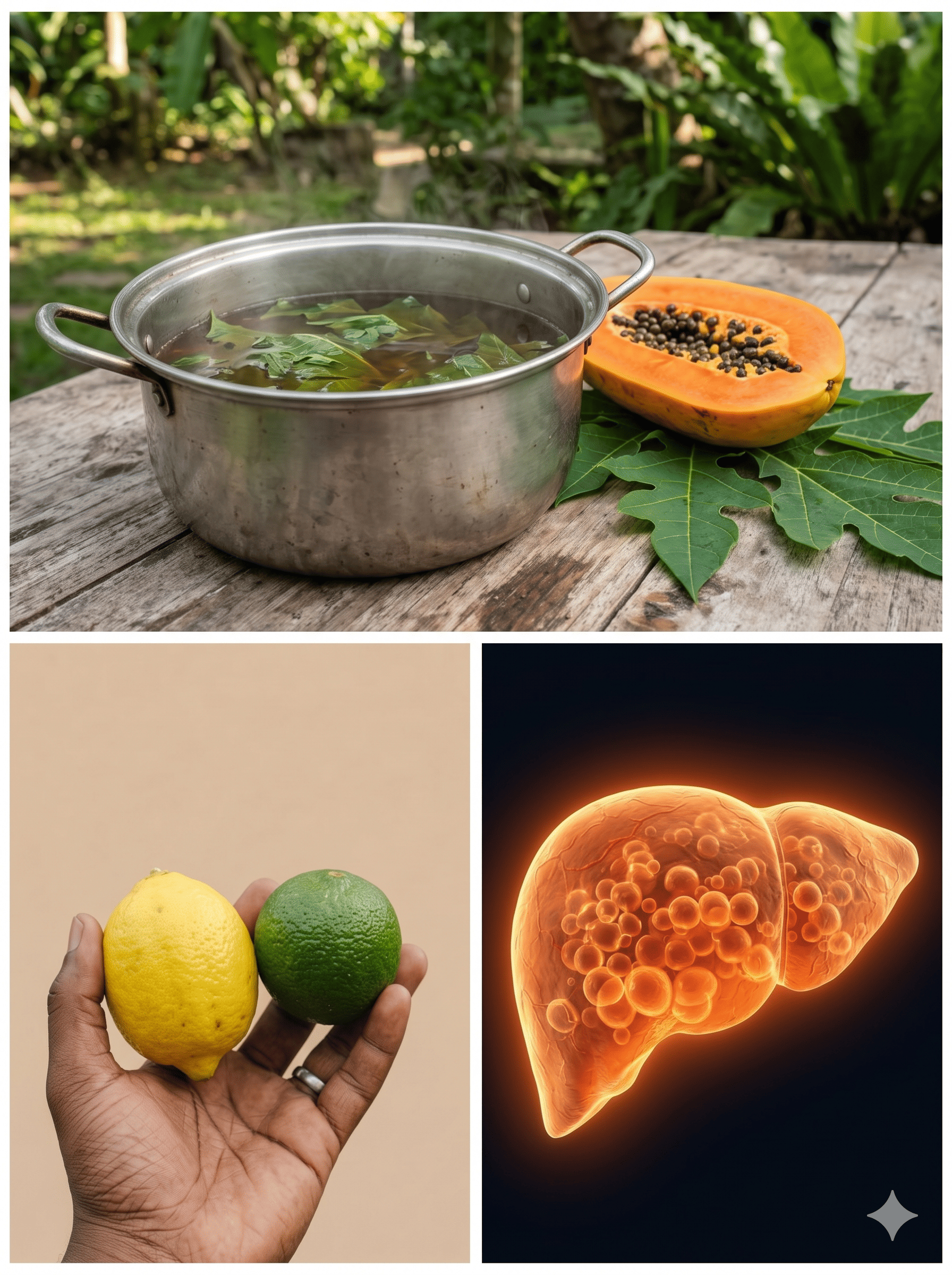
1. What Is Male Papaya Leaf?
Papaya (Carica papaya) is a tropical plant widely grown in many warm climates. Its fruit is commonly eaten fresh or used in smoothies, salads, and other dishes. Its leaves have also been used in traditional preparations in several cultures.
Male papaya plants produce flowers that typically do not develop into ordinary fruits. Their leaves resemble those of other papaya plants, and the term “male papaya leaf” is used in some traditional remedies.
Papaya leaves contain naturally occurring compounds, including flavonoids, phenolic compounds, and enzymes such as papain. The composition can vary depending on the plant variety, growing conditions, maturity, and preparation method.
Researchers have investigated certain papaya leaf extracts for biological effects in laboratory and clinical settings. Some research has examined their potential relationship with platelet counts, particularly in dengue fever. Nevertheless, these findings do not establish that papaya leaf juice improves liver function or treats liver disease.
The effects of a concentrated leaf preparation may also differ from those of eating ripe papaya fruit.
2. Why Are Papaya Leaves Used in Traditional Wellness Practices?
Traditional herbal preparations often use leaves, roots, fruits, and other plant parts for purposes passed down through generations.
Papaya leaves are sometimes included in homemade drinks intended to promote general wellness. Some traditional practices associate them with digestion, antioxidant activity, and the body’s natural processes.
It is useful to understand what these proposed benefits mean.
Antioxidant compounds
Papaya leaves contain plant compounds that may demonstrate antioxidant activity in laboratory studies. Antioxidants can help neutralize certain unstable molecules under specific conditions.
However, laboratory findings do not automatically translate into meaningful health benefits in humans. More research is needed to determine whether consuming papaya leaf preparations produces clinically significant effects.
Plant enzymes and other compounds
Papaya leaves contain enzymes and other naturally occurring substances. Their concentration can change with processing, storage, and preparation.
The presence of these substances does not prove that a leaf drink can remove toxins from the liver, dissolve fat deposits, or reverse liver damage.
Traditional use versus established treatment
A remedy may have a long history of traditional use without having been adequately tested for safety and effectiveness.
For people with diagnosed liver conditions, relying on an unproven herbal preparation instead of appropriate medical care may delay treatment and increase the risk of complications.
3. What Does Lime Add to This Traditional Drink?
Lime is a citrus fruit valued for its tart flavor and vitamin C content. It is commonly used in water, beverages, marinades, and traditional food preparations.
When added to papaya leaf juice, lime may make the mixture more palatable and provide some vitamin C.
Vitamin C and normal body function
Vitamin C is an essential nutrient involved in collagen formation, wound healing, and normal immune function. It also acts as an antioxidant.
Eating fruits and vegetables that provide vitamin C can contribute to a balanced diet. However, vitamin C does not make lime juice a treatment for hepatitis, jaundice, fatty liver, or other liver disorders.
Does lime detoxify the liver?
The term “detox” is often used in marketing for drinks and herbal mixtures. In reality, the liver already processes many substances, while the kidneys and other organs also help maintain the body’s internal balance.
There is no strong clinical evidence that combining lime juice with papaya leaves detoxifies the liver or removes a buildup of toxins in people with liver disease.
Lime can be part of a healthy diet, but it should not be presented as a substitute for medical treatment.
4. Traditional Male Papaya Leaf and Lime Drink Recipe
The following preparation reflects a traditional recipe. It is provided for informational purposes, not as a medically validated treatment or a recommended therapeutic dose.
Ingredients
- Half of one fresh male papaya leaf
- One cup of drinking water
- Juice from one fresh lime
Preparation
Step 1: Identify and clean the leaf.
If discussing this traditional recipe, use only a correctly identified papaya leaf from a plant that has not been treated with unsuitable chemicals. Rinse it thoroughly under clean running water.
Step 2: Prepare the mixture.
The traditional method involves blending the leaf with one cup of water until the mixture becomes liquid.
Step 3: Strain the liquid.
Straining removes much of the solid plant material and produces a thinner liquid.
Step 4: Add the lime juice.
Squeeze the juice from one fresh lime into the strained mixture and stir.
Step 5: Handle the preparation safely.
Homemade plant preparations can vary considerably in concentration and cleanliness. Discard any mixture that has been stored improperly or appears spoiled.
Importantly, blending and straining do not remove all potentially harmful plant compounds or guarantee microbiological safety.
Can this drink be taken twice daily?
Some traditional instructions suggest taking half a cup to one cup twice daily for one to two months, followed by a seven-day break.
However, this schedule has not been established as safe or effective for treating liver disease. There is no validated therapeutic dose or treatment duration for the papaya leaf and lime combination.
For this reason, the suggested quantity and duration should not be interpreted as medical advice. Anyone with a liver condition should consult a qualified healthcare professional before consuming concentrated papaya leaf preparations.
5. Can Papaya Leaf and Lime Treat Fatty Liver?
Fatty liver disease occurs when excess fat accumulates in the liver. The condition may be associated with obesity, insulin resistance, type 2 diabetes, abnormal blood fats, and other metabolic factors. Alcohol can also contribute to liver fat accumulation.
Many people with fatty liver have few or no noticeable symptoms. Diagnosis may involve medical history, blood tests, and imaging studies.
Although papaya leaves contain potentially interesting plant compounds, there is not enough high-quality human evidence to conclude that papaya leaf and lime juice reduces liver fat or reverses fatty liver disease.
Evidence-based ways to support fatty liver health
Depending on the individual’s condition, healthcare professionals may recommend:
- Maintaining or gradually reaching a healthy weight.
- Eating a balanced diet rich in vegetables, fruits, whole grains, and appropriate protein sources.
- Limiting sugary drinks and excessive intake of highly processed foods.
- Engaging in regular physical activity.
- Managing blood glucose, cholesterol, and triglyceride levels.
- Avoiding alcohol when advised, particularly when alcohol-related liver disease or significant liver damage is present.
- Attending follow-up appointments and completing recommended tests.
The National Institute of Diabetes and Digestive and Kidney Diseases explains that gradual weight loss can reduce liver fat and may improve inflammation and fibrosis in people with excess weight and fatty liver disease.
These measures have a stronger evidence base than relying on an unproven herbal drink.
6. What About Hepatitis B and Liver Inflammation?
Hepatitis B is a viral infection that can cause liver inflammation. Some infections resolve, while chronic hepatitis B may persist for years and increase the risk of cirrhosis and liver cancer.
Chronic hepatitis B does not always cause obvious symptoms, which makes testing and appropriate follow-up particularly important.
There is no reliable clinical evidence that male papaya leaf juice mixed with lime eliminates hepatitis B virus or replaces antiviral treatment.
Depending on the person’s test results and degree of liver injury, a healthcare professional may recommend monitoring, antiviral medication, or other care.
People with hepatitis B should not discontinue prescribed medication or replace it with herbal preparations without medical guidance.
Similarly, liver inflammation can result from viral infections, alcohol, medication toxicity, autoimmune disorders, and other conditions. The correct treatment depends on the underlying cause.
7. Is This Remedy Suitable for Jaundice?
Jaundice refers to yellowing of the skin or whites of the eyes. It can occur when bilirubin, a yellow substance produced during the breakdown of red blood cells, accumulates in the body.
Jaundice is a sign that requires medical assessment, not a condition that should be treated at home with a herbal drink.
Possible causes include hepatitis, certain blood disorders, gallstones, bile duct obstruction, and other liver or biliary conditions.
Seek urgent medical assessment if you notice new yellowing of the skin or eyes. Severe abdominal pain, fever, repeated vomiting, confusion, unusual drowsiness, or bleeding alongside jaundice requires emergency evaluation.
Papaya leaf and lime juice should never be used to delay diagnosis or treatment.
8. Potential Risks of Papaya Leaf Juice
Natural ingredients are not automatically safe for everyone. Concentrated plant preparations may have different effects from ordinary foods, and their composition can be unpredictable.
Consider the following precautions before using papaya leaf juice.
Digestive discomfort
Papaya leaf preparations may cause nausea, stomach discomfort, or other digestive symptoms in some people. The likelihood of these effects can depend on the concentration and amount consumed.
Allergic reactions
People with allergies to papaya or related substances should be cautious. Stop using a preparation and seek medical advice if an adverse reaction occurs. Difficulty breathing or swelling of the throat requires emergency care.
Medication interactions
Herbal products can interact with prescription medications or affect the management of existing conditions. People taking medication for diabetes, blood clotting, or other chronic illnesses should consult their healthcare professional before using concentrated papaya leaf preparations.
Pregnancy and breastfeeding
Safety information for concentrated papaya leaf preparations during pregnancy and breastfeeding is limited. Avoid medicinal use unless specifically approved by a qualified healthcare professional.
Existing liver or kidney disease
People with diagnosed liver disease should be especially careful with herbal products because some substances can cause liver injury or complicate existing treatment.
The fact that a product is plant-based does not guarantee that it will protect the liver.
9. How to Support Your Liver Naturally and Safely
Rather than depending on a single drink, focus on habits that support overall metabolic and liver health.
Eat a balanced diet
Choose a variety of vegetables, whole fruits, whole grains, legumes, nuts, and suitable protein sources. Limit excessive added sugar and sugary beverages.
No individual food can guarantee that liver disease will be prevented or reversed.
Stay physically active
Regular physical activity can improve metabolic health and help manage weight, blood sugar, and blood fats. Choose activities appropriate for your fitness level and medical circumstances.
Be careful with alcohol
Alcohol can damage the liver, and avoiding it is particularly important for people with alcohol-related liver disease or other significant liver conditions.
Ask your healthcare professional whether complete avoidance is appropriate for your situation.
Use medications responsibly
Take medication only as directed. Do not exceed recommended doses of over-the-counter medicines, and ask a healthcare professional before combining medicines with herbal products.
Get appropriate testing
Blood tests and other examinations can help identify liver problems and determine whether further assessment is needed. People at risk of hepatitis B should discuss screening and vaccination with a healthcare professional.
Early evaluation is often more valuable than trying multiple home remedies after symptoms appear.
10. Frequently Asked Questions
Can male papaya leaf juice cleanse the liver?
There is insufficient clinical evidence to show that male papaya leaf juice cleanses the liver or removes toxins. The liver naturally processes many substances, and suspected liver disease should be assessed medically.
Can I drink papaya leaf juice every day?
The safety of long-term consumption of concentrated papaya leaf juice is not well established. There is no scientifically validated daily dose for treating liver conditions. Speak with a healthcare professional before using it regularly.
Does adding lime make papaya leaf juice more effective?
Lime adds flavor and vitamin C, but there is no strong clinical evidence that combining it with papaya leaves improves liver function or treats liver disease.
How long does it take for this remedy to improve the liver?
No reliable treatment timeline has been established because the combination has not been proven to treat liver disease. The appropriate management and expected recovery time depend on the underlying diagnosis.
What are the warning signs of liver problems?
Possible signs include persistent fatigue, abdominal discomfort, dark urine, pale stools, swelling in the abdomen or legs, unusual itching, and yellowing of the skin or eyes. Some liver conditions cause no noticeable symptoms in their early stages.
Seek medical advice if you develop concerning symptoms, especially jaundice or unexplained swelling.
Conclusion: Put Liver Health First
Male papaya leaf and lime juice is a traditional homemade preparation that combines a tropical plant with a vitamin C-rich citrus fruit. While both ingredients contain naturally occurring compounds, their combination has not been established as an effective treatment for fatty liver, hepatitis B, jaundice, liver inflammation, or poor liver function.
If you enjoy papaya fruit and lime as foods, they can fit into a balanced diet when appropriate. Concentrated papaya leaf juice, however, should not be assumed to be safe or therapeutic simply because it is natural.
The most responsible approach to liver wellness is to identify potential problems early, follow evidence-based medical guidance, maintain healthy daily habits, and discuss herbal products with a qualified healthcare professional.
Health disclaimer: This article is for educational purposes only and is not a substitute for professional medical advice, diagnosis, or treatment. Do not use papaya leaf and lime juice to treat liver disease or delay medical care. Consult a healthcare professional before using herbal preparations, especially if you have an existing medical condition or take medication.


