
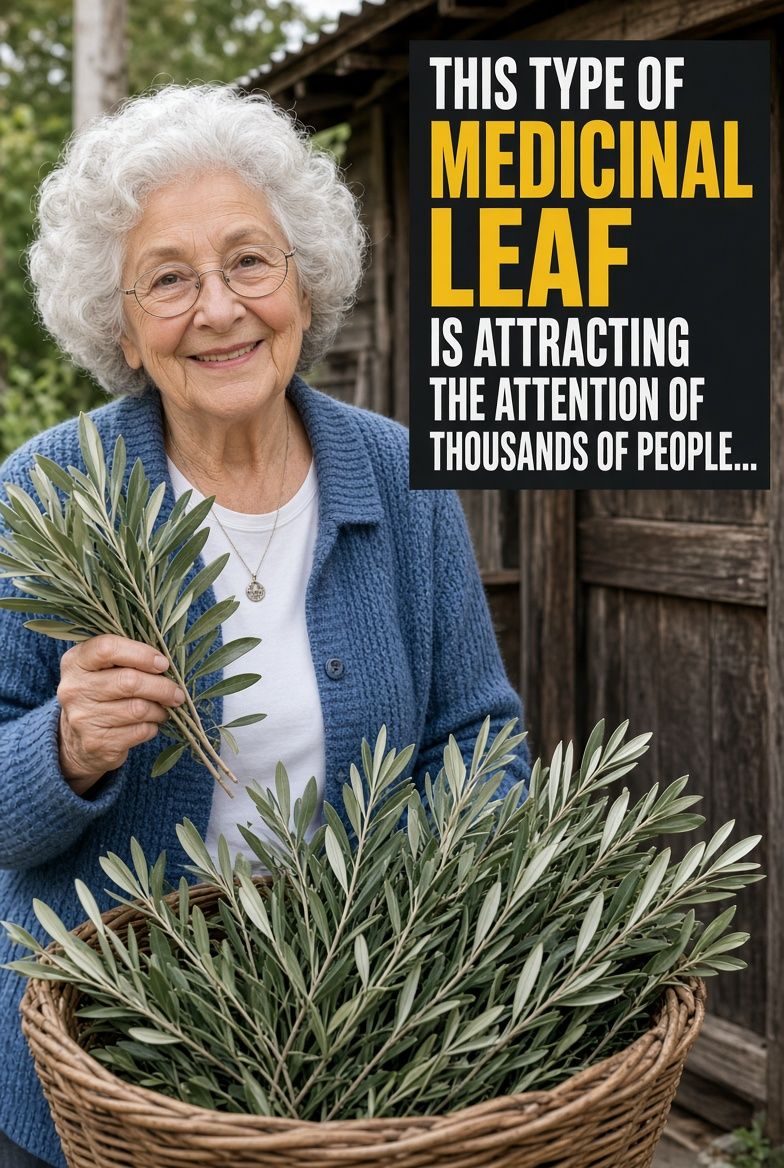
The viral poster shows an older woman holding olive branches beside a basket full of silvery-green leaves: “THIS TYPE OF MEDICINAL LEAF IS ATTRACTING THE ATTENTION OF THOUSANDS OF PEOPLE…”
The leaf is olive leaf — from Olea europaea, the same tree that gives us olive oil. While the oil gets all the fame, the leaves have their own long history in Mediterranean folk medicine. Why the sudden attention?
Traditional Uses
Olive leaf has been used traditionally for:
- Supporting healthy blood pressure
- Seasonal immune support (colds and flu)
- General “tonic” use for vitality
The usual preparation is a tea: a tablespoon of dried olive leaves steeped in hot water for 10 minutes, strained, drunk once or twice a day. Olive leaf extract capsules are also widely sold.
What Is Actually in the Leaves
Olive leaves are rich in bioactive compounds — in some cases more concentrated than the oil:
- Oleuropein — the signature compound, a potent antioxidant studied for cardiovascular and metabolic effects
- Hydroxytyrosol — one of the most powerful natural antioxidants known
- Flavonoids — luteolin, apigenin and others with anti-inflammatory activity in the lab
These are genuinely interesting molecules, and olive leaf is one of the better-studied herbal remedies.
What the Evidence Says
- Blood pressure: several small human trials suggest olive leaf extract may modestly support healthy blood pressure — comparable in one small study to a low dose of a common blood pressure drug. Promising, but the studies are small and short.
- Blood sugar and cholesterol: animal and early human studies suggest possible benefits for glucose and lipid metabolism — not yet proven.
- Immune support: laboratory studies show antimicrobial activity; human evidence for “immune boosting” is thin.
- What it doesn’t do: cure hypertension, replace blood pressure medication, or treat infections on its own.
Safety — Especially Important Here
This is the part that matters most, because olive leaf actually does things in the body:
- Blood pressure medication: if you take drugs for hypertension, olive leaf may add to the effect and push pressure too low. Never combine without your doctor’s knowledge.
- Diabetes medication: possible additive glucose-lowering effect — monitor and consult.
- Pregnancy and breastfeeding: safety not established — avoid.
- “Thousands of people” is not a safety trial: popularity tells you nothing about interactions with your specific medications.
How to Use It Wisely
- If you are curious, start with the tea (milder than concentrated extracts).
- Tell your doctor — especially if you take blood pressure, diabetes or heart medication.
- Monitor your blood pressure if you use it regularly.
- Keep prescribed medication; olive leaf is a complement at most, never a substitute.
Conclusion
Olive leaf deserves its moment in the spotlight more than most viral remedies: real compounds, real (if early) human evidence, and a long traditional history. But “attracting attention” is not the same as “proven safe for everyone.”
Respect it like the active plant it is — check with your doctor, watch your numbers, and enjoy the tea for what it is: a promising traditional remedy, not a miracle leaf.
This article is for informational purposes only and does not replace professional medical advice. Consult your trusted doctor before using herbal preparations, especially if you take medication or have a chronic condition.


