
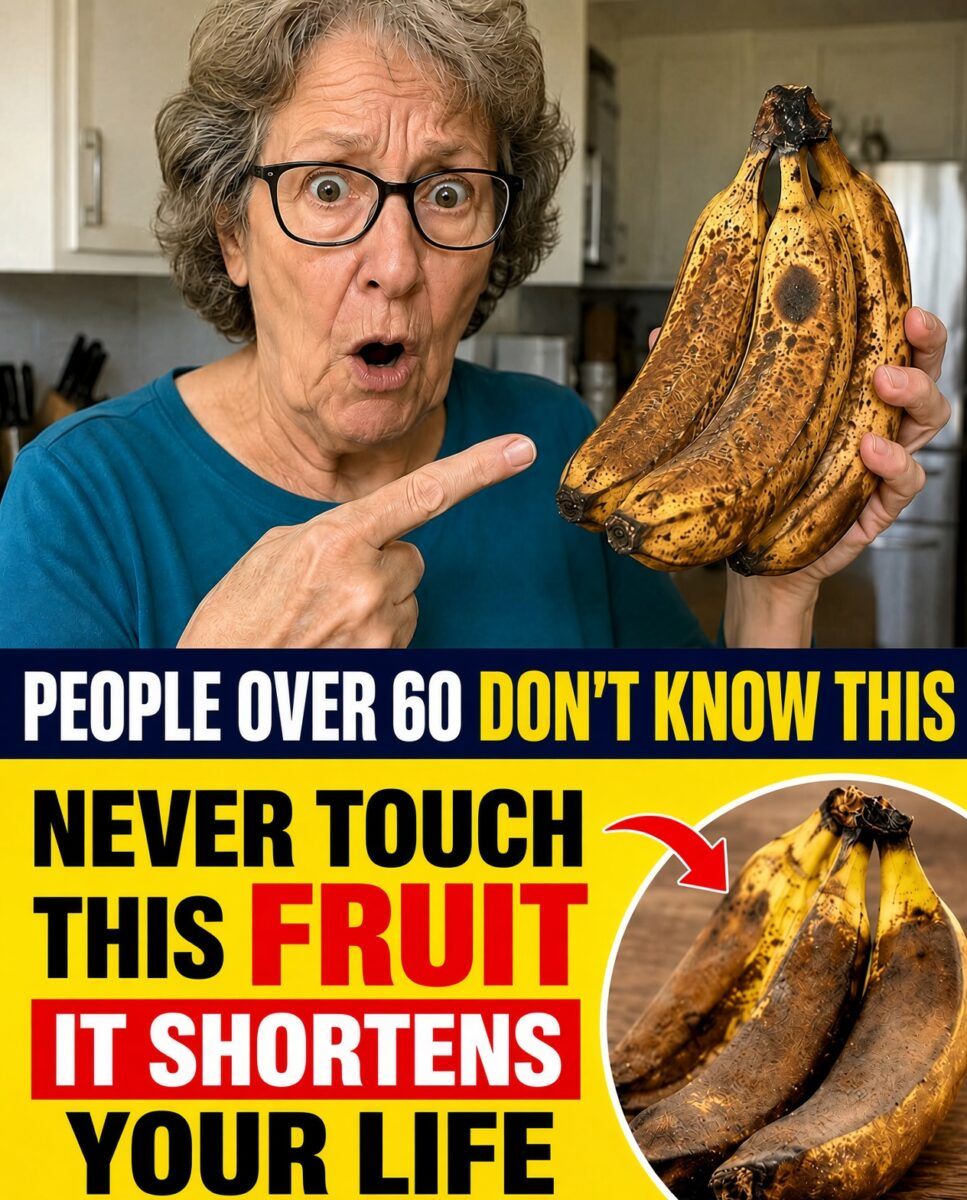
The viral poster shows a shocked senior pointing at a bunch of overripe, brown-spotted bananas: “People over 60 don’t know — never touch this fruit — it shortens your life.” Overripe bananas — the ones going brown and mushy — are the target. The article behind this poster names the 4 worst fruits to avoid and the 4 to eat daily after 60. What’s the real story about brown bananas?
The Claim
Overripe bananas are dangerous for people over 60 — their sugar content spikes, they “shorten your life,” and seniors should avoid them.
What Is Actually in an Overripe Banana
More sugar, less starch: as bananas ripen, starches convert to simple sugars — a brown banana has a higher glycemic index than a green one, but roughly the same total calories (~105 per banana). More antioxidants: spotted bananas actually contain higher levels of certain antioxidants than unripe ones. Same potassium, B6, fiber: the core nutrition doesn’t disappear — fiber content drops slightly, that’s all. Nothing toxic: there is no poison that appears in a brown banana; “shortens your life” has no biochemical basis.
What the Evidence Supports
Glycemic impact: riper bananas raise blood sugar faster — relevant for diabetics, who should prefer firmer, less-ripe bananas and pair fruit with protein or fat. For non-diabetics, the difference is modest. The “worst fruits” framing: no fruit “shortens your life.” What matters after 60 is total dietary pattern — excess added sugar and juice, not whole fruit. Whole fruit, even ripe bananas, is associated with better outcomes than no fruit. What seniors should actually watch: fruit juice and dried fruit (concentrated sugar, no satiety), not the brown banana in the fruit bowl.
Safety Notes
Diabetics: choose less-ripe bananas, keep portions to one small banana, and pair with nuts or yogurt. Kidney disease: bananas are high in potassium — limited in advanced CKD regardless of ripeness. Mold: a banana that’s black, leaking, or smells fermented belongs in the trash — that’s spoilage, not ripeness.
How to Use It Wisely
Eat bananas at the ripeness you enjoy; greener if you watch blood sugar. The 4 fruits worth eating daily after 60 per the article’s spirit: berries, apples, citrus, and yes — bananas in moderation. Judge fruit by the whole diet, not by spots on the peel.
Conclusion
The poster’s terror — a brown banana as a life-shortener — is pure theater. An overripe banana is slightly sweeter and slightly less fibrous than a green one; it is not a toxin, and it doesn’t cut years off anyone’s life. Eat the banana. Fear the added sugar in your juice and pastries instead — that’s where the real “life-shortening” lives.
This article is for informational purposes only and does not replace professional medical advice. Consult your trusted doctor for personalized guidance, especially if you have diabetes or kidney disease.


