
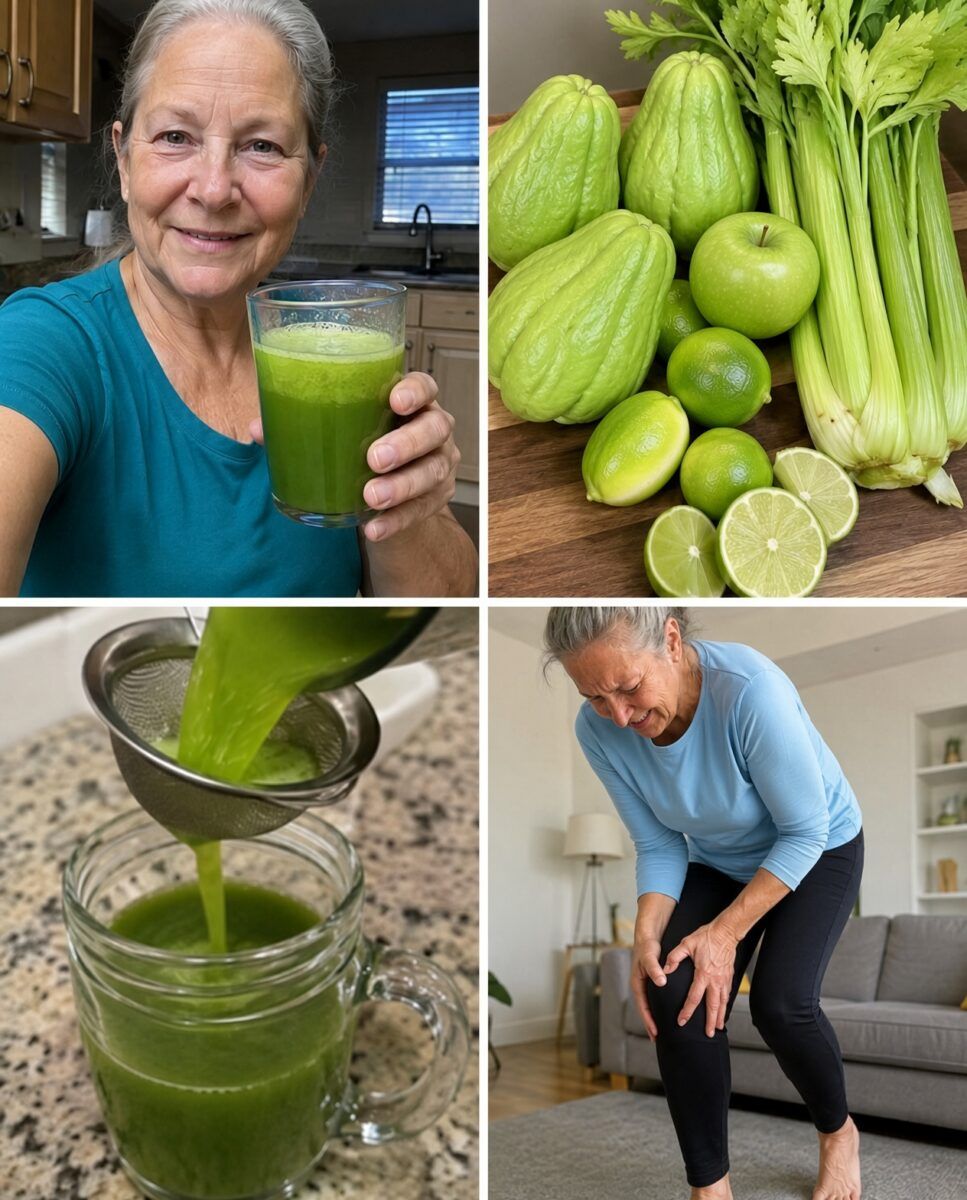
The viral poster is a four-panel collage with no overlay text: a smiling senior holding a glass of green juice; chayote squash, celery and limes; the juice being strained; and a woman clutching a painful knee. The caption claims: chayote can relieve knee pain, high blood pressure, swollen feet, cholesterol, anemia and poor circulation. Chayote (Sechium edule) — the humble green squash — blended with celery and lime. The article behind this post presents it as a multi-purpose remedy. What does the evidence say?
The Recipe
1 chayote squash, peeled and chopped; 2–3 celery stalks; juice of 1–2 limes; water, blended and strained. Drunk fresh, typically in the morning.
What Is Actually in It
Chayote — very low calorie, high water content; vitamin C, folate, potassium, and small amounts of myricetin (a flavonoid studied for blood-sugar effects). Celery — phthalides (compounds studied for relaxing blood-vessel walls), potassium, vitamin K. Lime — vitamin C, citrate, flavor that makes the juice drinkable. Together: a hydrating, potassium-rich, low-sodium vegetable juice.
What the Evidence Supports
Blood pressure: potassium-rich, low-sodium vegetable intake genuinely supports healthy blood pressure — this is DASH-diet territory with solid evidence. Small studies on chayote juice suggest modest blood-pressure effects, but they’re preliminary. Swollen feet: if swelling comes from mild fluid retention, hydration plus potassium can help; if it’s heart, kidney or venous disease, juice won’t fix it — and the cause needs a doctor. Cholesterol and circulation: vegetables displacing worse foods helps lipid profiles over time; no juice “cleans” arteries. Knee pain and anemia: there’s no mechanism by which chayote juice repairs cartilage or builds red blood cells meaningfully — knee arthritis needs weight management, movement, and medical care; anemia needs its cause found (iron, B12, chronic disease). The six-claims-at-once pattern: a drink that fixes everything fixes nothing specifically — but as a daily vegetable habit, it’s still good nutrition.
Safety Notes
Blood pressure medication: large potassium loads can interact with ACE inhibitors, ARBs and potassium-sparing diuretics — talk to your doctor if you take these. Kidney disease: high-potassium juices can be dangerous in CKD. Swollen feet + shortness of breath, chest pain, or one-sided swelling — seek care promptly; these are not juice situations. Diuretics + juice: watch for dizziness or electrolyte shifts.
How to Use It Wisely
Drink it as your morning vegetable serving — fresh, not stored for days. Keep the real levers for each complaint: blood pressure (medication, salt, weight, walking), knees (strength, weight, physiotherapy), swelling (diagnosis first). Straining removes fiber — consider drinking it unstrained or eating the vegetables too.
Conclusion
Chayote-celery-lime juice won’t cure six conditions at once — but as a potassium-rich, hydrating vegetable habit, it genuinely supports the blood-pressure half of the claims, and it’s a fine way to start the day. The poster’s list is fantasy; the juice is just good produce. Drink your greens. Treat your knees, pressure and swelling with their real treatments alongside.
This article is for informational purposes only and does not replace professional medical advice. Consult your trusted doctor for personalized guidance, especially if you take blood pressure medication or have kidney, heart or circulation disease.


