
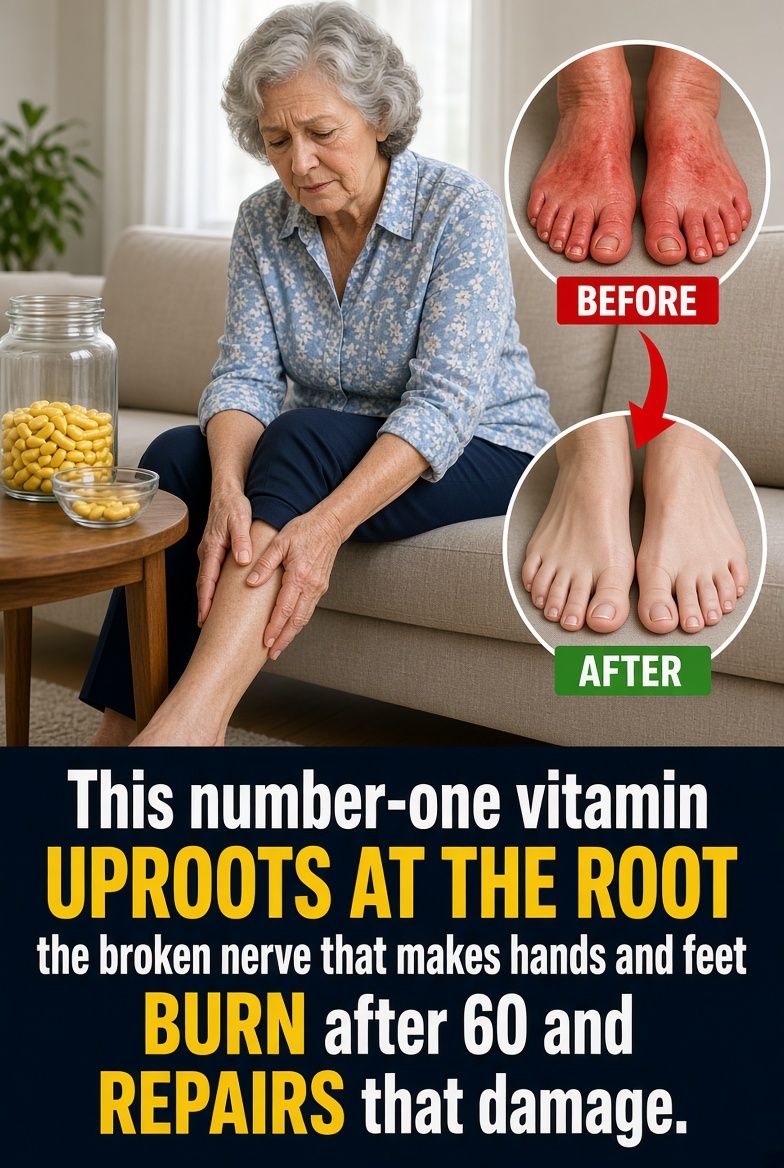
The Number-One Vitamin for Burning Hands and Feet
Picture this: you take off your shoes at a family gathering and immediately tuck your feet under the table — they burn as if you had walked on hot asphalt. It is not the weather, and it is not “just an age thing.” That uncomfortable, prickling, persistent sensation often arrives at night, interrupts sleep, and can make even the bedsheet feel too heavy. Countless ads promise fast relief with one miracle capsule, but the truth is different: burning feet and hands after 60 are almost always a sign that something deserves a closer look.
What That Burning Really Means
The burning, tingling, electric, or deep-itching feeling is usually linked to irritation of the peripheral nerves — the ones carrying sensation from the spinal cord to the toes and fingers. It often starts in the feet because the longest nerves are the first to suffer; if it progresses, it can climb to the calves, hands, and fingers. The good news: many causes can be reviewed, treated, or controlled.
The Most Common Causes Worth Checking
- High blood sugar over time. Poorly controlled diabetes can slowly irritate the nerves — the medical name is neuropathy.
- Low vitamin B12. B12 supports proper nerve function, but absorption decreases with age. Long-term use of metformin or antacids can lower its levels.
- Frequent alcohol. It can affect the nerves and worsen absorption of B vitamins — in sensitive people the effect builds up over the years.
- Thyroid problems. An under- or overactive thyroid can bring fatigue, weight changes, dry skin, and sometimes nerve discomfort.
- Compressed nerves. Sometimes the issue is one pinched nerve in the back, hip, ankle, or wrist, causing burning or numbness.
The truth: many people think the burning is just “internal heat,” but it can be an early signal that the nerves are irritated or that something else is quietly going wrong.
Warning Signs You Should Not Ignore
- Loss of sensitivity in feet or hands.
- Wounds that do not heal, or that you never felt happening.
- Weakness, clumsiness, or difficulty walking.
- Pain that frequently wakes you at night.
- Redness, swelling, or color changes in the skin.
- Burns from hot water because you could not feel the temperature.
If any of these appear, do not wait to “see if it goes away” — the earlier the cause is reviewed, the easier it is to act.
Practical Steps You Can Take Today
- Step 1: Track what happens for 3 nights — when the burning starts, what you ate, alcohol, activity, tight shoes. That simple log helps more than you think.
- Step 2: Check your feet every day in good light; use a mirror if needed. Look for cracks, wounds, ingrown nails, red or numb areas.
- Step 3: Use lukewarm water, never very hot. Dry well between the toes; avoid hard rubbing.
- Step 4: Choose friendlier footwear — roomy, stable soles, no rubbing seams; breathable cotton socks.
- Step 5: Move a little every day — 20 to 30 minutes of walking helps circulation and glucose control if your doctor allows it.
- Step 6: Bring your medications to the appointment, especially metformin or antacids used for years.
Habits That Can Support Your Nerves
Diet does not replace a medical evaluation, but it can support nerves and energy. Care for sources of vitamin B12 and protein: eggs, fish, lean meat, dairy if tolerated, and liver occasionally per medical advice. Also smooth out sugar spikes with more moderate portions of bread, desserts, and soft drinks. For nighttime burning, cool cloths, light sheets, and a cooler room may ease the feeling — never put ice directly on the skin.
The Right Question to Bring to Your Doctor
Instead of asking “which vitamin removes this fast?”, try this: “Doctor, with my age, my medications, and my sugar levels, is it worth checking vitamin B12 and other causes of the burning, instead of assuming nothing can be done?” That question changes the consultation — it forces a review of diabetes, low B12, alcohol, thyroid, circulation, and nerve compression, which each need a different plan.
The best move is not guessing which vitamin to buy — it is finding out why the burning started. This article is informational and does not replace a personalized medical consultation.


