
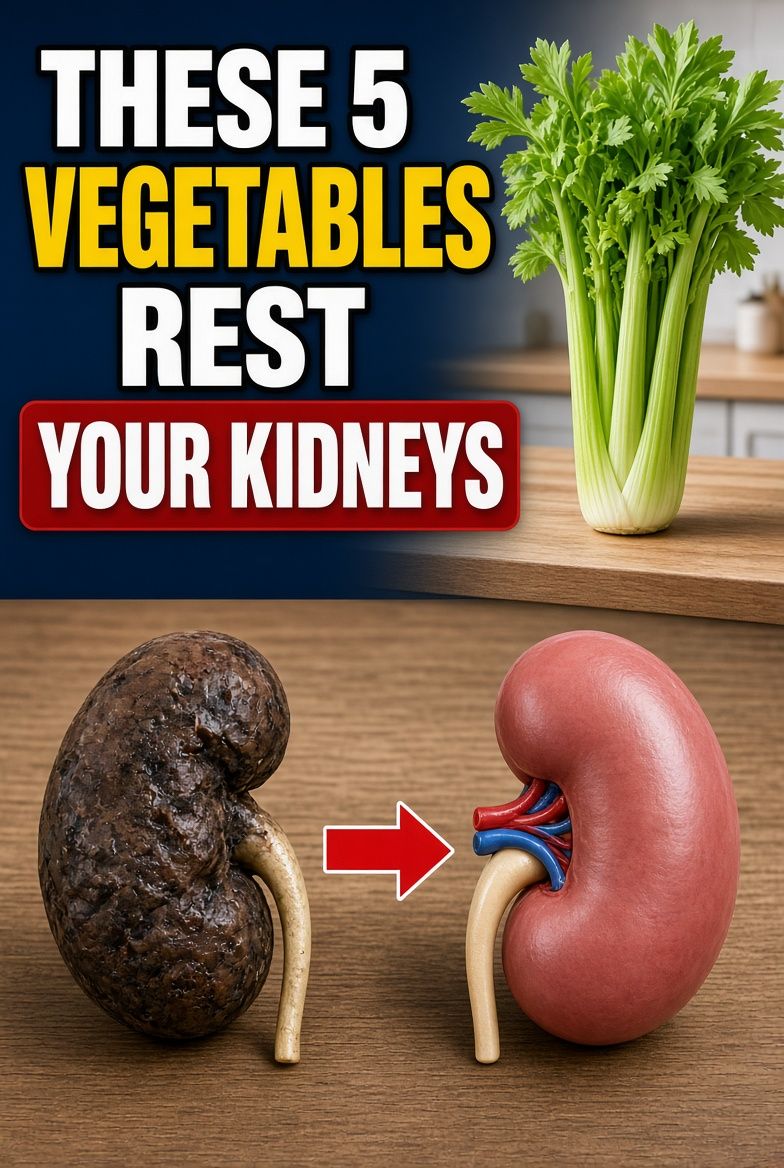
The viral poster shows a bunch of celery above a damaged kidney transforming into a healthy one: “These 5 vegetables rest your kidneys.” Five vegetables to “rest” the kidneys — with celery as the star. The article behind this poster lists the five. Which vegetables actually support kidney health, and what does “rest” even mean?
The Five (per the article)
Celery — the poster’s star: high water content, some antioxidants, traditional diuretic reputation. Cucumber, cabbage, cauliflower, bell pepper — the typical low-potassium, kidney-friendly lineup.
What Is Actually in Them
Water and fiber — hydration and gut health, both genuinely kidney-relevant. Low potassium load — the real reason these specific vegetables are “kidney-friendly”: damaged kidneys struggle to clear potassium. Antioxidants — vitamin C, flavonoids; modest but real.
What the Evidence Supports
The list itself is sound dietetics: these are exactly the vegetables renal dietitians recommend — low in potassium, phosphorus and sodium. The poster accidentally gives good advice. “Rest your kidneys” is a metaphor, not a mechanism — but eating kidney-friendly vegetables genuinely reduces the filtration burden vs. a high-sodium, high-potassium diet. What vegetables can’t do: reverse chronic kidney disease, “heal” the damaged kidney in the poster, or replace dialysis or medication. CKD is managed, not juiced away. Hydration helps; overhydration doesn’t: adequate water supports kidneys; forcing gallons does not “flush” disease.
Safety Notes — Read Carefully
Potassium danger: the flip side — high-potassium “healthy” foods (bananas, oranges, potatoes, tomatoes) can be dangerous in advanced CKD. The poster’s low-potassium list is the safe side; don’t freelance with the other side. “Natural diuretics” aren’t medicine: celery’s mild diuretic effect doesn’t treat fluid overload or hypertension — prescribed diuretics do. Star fruit (carambola): not on this list, but worth the warning — it’s neurotoxic in kidney disease. Never substitute it in. Worsening swelling, fatigue, or changes in urination — see a nephrologist promptly.
How to Use It Wisely
Build meals around the kidney-friendly list if you have CKD — with your dietitian’s potassium limits. Control the big three: blood pressure, blood sugar, salt — these decide kidney fate far more than any vegetable. Keep nephrology follow-ups; labs, not posters, track kidney function.
Conclusion
Surprise: the poster’s vegetable list is genuinely good renal-diet advice — celery and friends really are the kidney-friendly choices. The “rest your kidneys” framing is folksy, but the direction is right. Just don’t mistake a good grocery list for a cure. Eat the vegetables. Mind the labs. Keep the nephrologist.
This article is for informational purposes only and does not replace professional medical advice. Consult your trusted doctor or dietitian for personalized guidance, especially if you have chronic kidney disease.


