
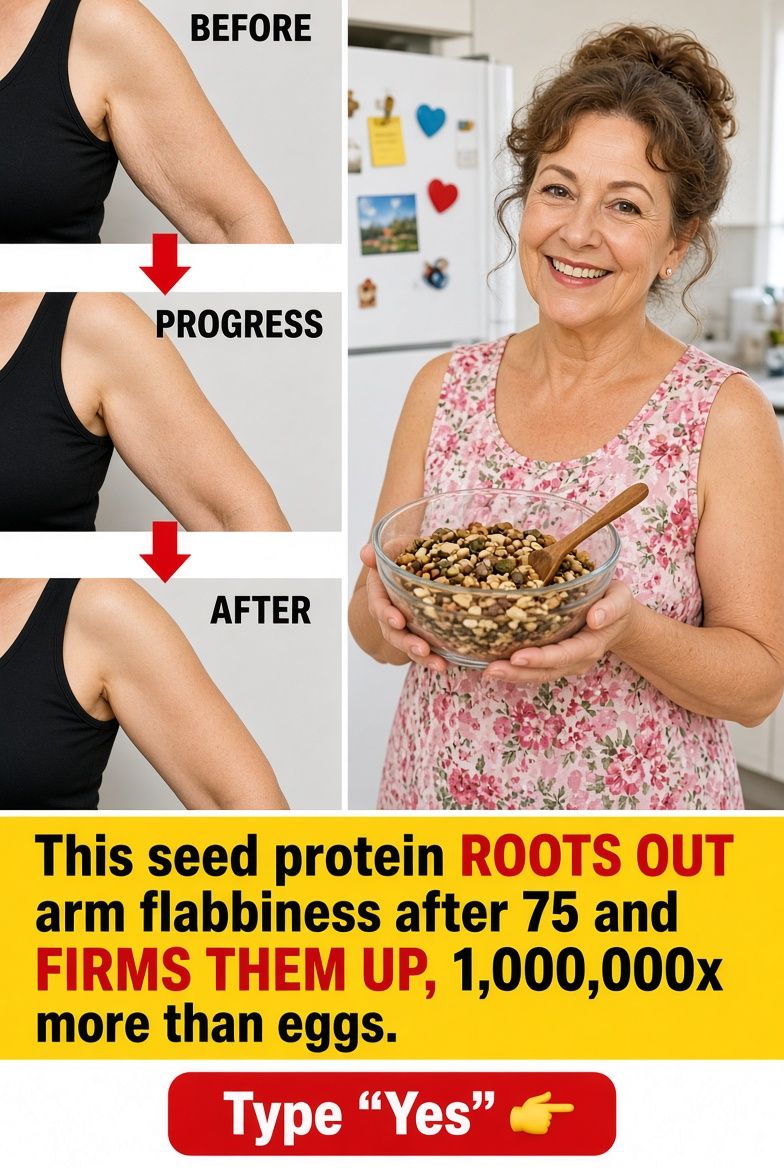
This Seed Protein Firms Flabby Arms After 75
After 75, many people notice their arms no longer look or feel the way they used to. The skin hangs a little lower, lifting grocery bags or grandchildren takes more effort, and that can hit confidence directly. Social media is full of miracle-seed promises, but the truth about firming your arms is much simpler — and backed by real evidence.
Why Do Arms Look Flabby After 75?
With age, the body naturally loses muscle mass — a process called sarcopenia. It shows most in the arms because there is less muscle “padding” there, while the skin also loses collagen and elastin, the fibers that keep it firm and elastic. Less daily activity and too little protein speed the process up. Research in older adults shows that adequate protein combined with resistance training helps slow the loss of strength — the body still responds, even if more slowly than before.
Seeds vs. Eggs: What the Ads Don’t Tell You
Claims that one seed “beats” eggs a million times over are misleading: they compare 100 grams of a dry seed with 100 grams of egg — but the egg is mostly water, and nobody eats 100 grams of seeds in one sitting. A normal portion of pumpkin seeds does add protein, yet eggs remain one of the most practical, affordable, complete proteins for older adults. The two complement each other; neither replaces the other.
Protein Content of Everyday Foods
- Egg (1 large) — 6–7 g of protein; complete and easy to use every day.
- Pumpkin seeds (2 tablespoons) — 8–9 g; a good complement, not a magic substitute.
- Hemp seed (3 tablespoons) — 9–10 g; excellent, though not always easy to find.
- Beans (1 cup) — 14–15 g; even better combined with tortilla or rice.
- Chicken breast or tuna (100 g) — 20–25 g; very useful for boosting protein.
- Fresh cheese (100 g) — 11–18 g; practical and easy to include.
The key is not hunting for a miracle food, but spreading quality protein across breakfast, lunch, and dinner.
What Really Firms Arms: Protein + Movement
Muscles need a reason to stay. If the arms are barely used, the body gradually shrinks that tissue — changing food alone will not tone them. The good news is that no gym is needed: studies show even light, safe, consistent exercises improve strength in older adults, and it shows in daily life — combing hair, carrying a bag, reaching a shelf, hugging with confidence.
- Front raises: seated, hold a bottle in each hand and raise your arms forward to shoulder height. Lower slowly. 8–10 reps.
- Triceps press-backs: elbows tucked at your sides, push the bottles back as if pushing air. 8–10 reps.
- Wall push-ups: one step from the wall, hands on it, bend your elbows slightly and push back. 8 reps.
- Towel squeeze: hold a soft towel between your palms at chest level, squeeze 5 seconds, release. 8 reps.
A Simple 7-Day Start
- Day 1: Write down what you ate yesterday — spot your protein gaps without guilt.
- Day 2: Boost breakfast: try 2 eggs with a spoonful of pumpkin seeds over beans or fresh cheese.
- Day 3: Improve your main meal: add beans plus chicken, tuna, or fish.
- Day 4: Do the 5-minute chair routine. Don’t chase perfection; chase repetition.
- Day 5: Change your snack: plain yogurt with pumpkin seeds instead of plain cookies.
- Day 6: Repeat the exercises. Six good reps beat fifteen sloppy ones.
- Day 7: Measure your relaxed upper arm with a tape — a real reference, not just the mirror.
Mistakes That Slow Progress
- Expecting results in 3 days — muscle does not rebuild over a weekend.
- Dropping eggs just because a “new seed” appeared.
- Doing too many reps with poor form and ending up with shoulder pain.
- Living on tea and broth — very poor diets strip muscle too.
Flabby arms after 75 are not a sentence or a shame. They are a signal that the body needs more support: enough protein, simple strength moves, and patience. Consistency beats intensity — every single time.


