
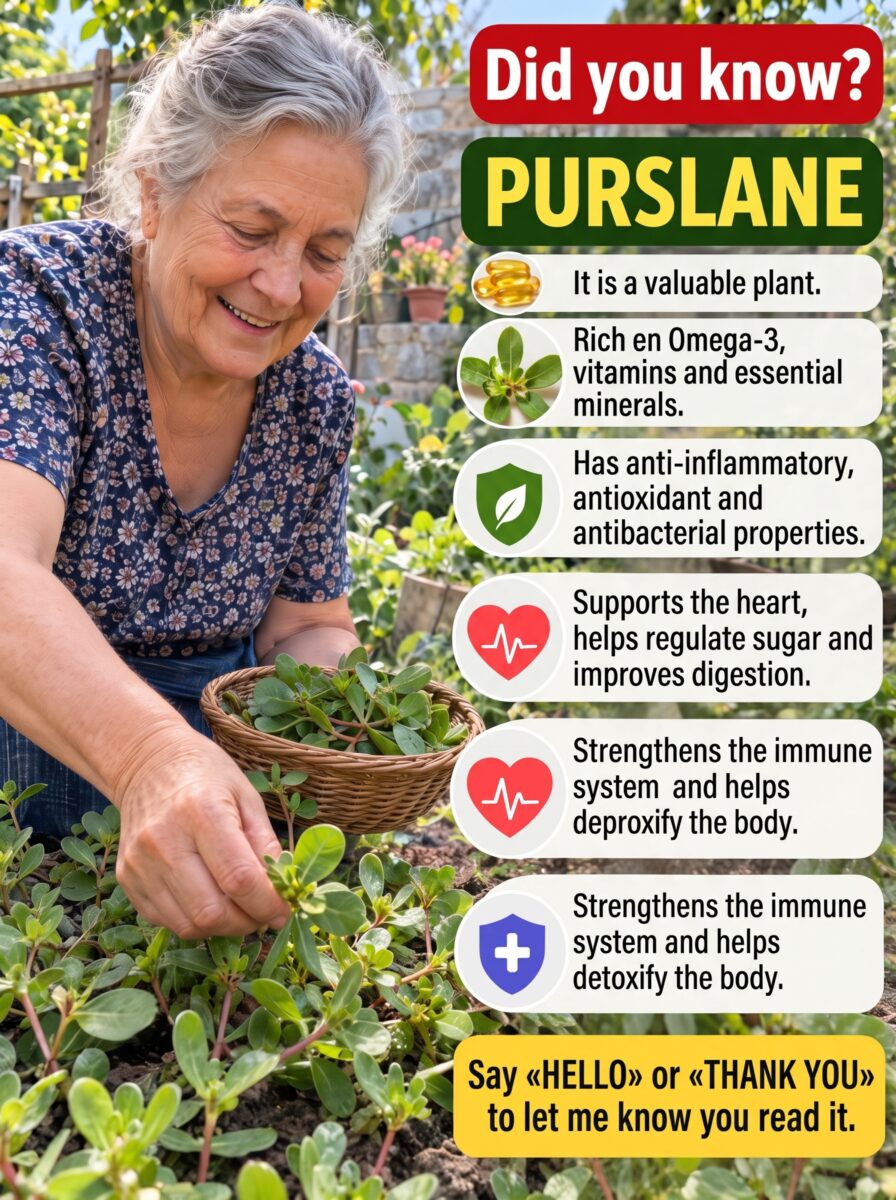
Did you know that a small green plant, which many consider a simple weed, can hide valuable nutrients? Purslane (Portulaca oleracea), also known as little hogweed, has been used for generations in the traditional Mediterranean diet. Our grandmothers gathered it from gardens and added it to salads and everyday meals. Today, purslane is attracting interest again thanks to the omega-3 fatty acids, vitamins, and antioxidants it contains. Let’s discover why it is worth knowing about this humble plant!
What Is Purslane and How Do We Recognize It? Purslane is a low, succulent plant with small green leaves and reddish stems. It grows mainly during the warm months and is frequently found in gardens and cultivated fields. It has a slightly sour, refreshing taste and can be consumed raw or cooked. Caution, though! We should not collect unknown plants without secure identification, as some look like purslane but are not edible.
5 Interesting Properties of Purslane
Contains Plant Omega-3s Purslane stands out because it contains alpha-linolenic acid (ALA), a plant-based omega-3 fatty acid. Omega-3s are part of a balanced diet and are related to the normal functioning of the body.
Offers Natural Antioxidants Its leaves contain various antioxidant substances, such as carotenoids and vitamin C. These components participate in the natural mechanisms protecting cells from oxidative stress.
Contributes to Mineral Intake Purslane contains potassium and magnesium, which are essential for many normal functions. Potassium participates in normal muscle function, while magnesium contributes to the functioning of the nervous system.
Is Light and Refreshing Thanks to its high water content and low energy value, it can make an excellent addition to a summer salad.
Constitutes Part of the Traditional Diet In many Greek homes, purslane was combined with tomato, cucumber, olive oil, and lemon. This simple habit offers a variety of plant foods without complicated preparations.
Traditional Recipe with Purslane and Lemon Do you want to try an easy way to enjoy purslane? Ingredients:
1 cup of fresh purslane
1 small tomato
Half a cucumber
1 tablespoon of olive oil
Juice of half a lemon
Execution: Wash the purslane and vegetables thoroughly with plenty of running water. Cut the tomato and cucumber into small pieces. Add the purslane, olive oil, and lemon juice. Mix gently and serve immediately. This gives you a refreshing, nutritious salad that is particularly suited for hot days.
Who Should Be Careful? Purslane contains oxalates. Those with a history of calcium oxalate kidney stones are advised to consult their doctor regarding its consumption. Additionally, it is not a cure for hypertension, diabetes, or circulation problems.
Grandma’s Forgotten Secret! Sometimes the most interesting foods are right next to us. Purslane is a characteristic example of a traditional plant that can enrich our diet. Have you ever tried purslane? Write me a “THANK YOU” in the comments to keep discovering simple traditional recipes! Share this article with someone who loves natural ingredients and the old secrets of Greek cuisine!


